
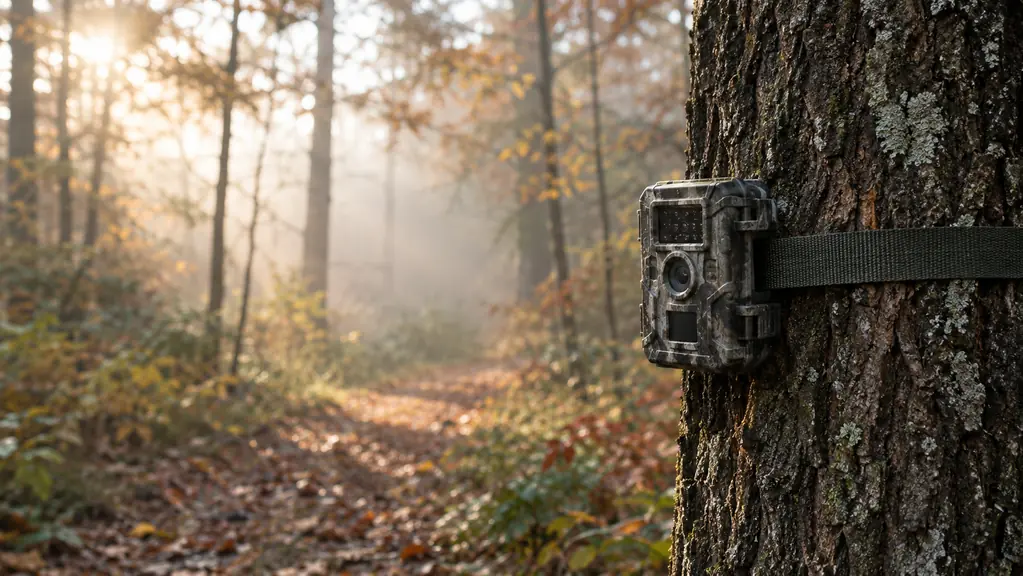
I will be honest with you: I bought the WOSPORTS Mini Trail Camera with low expectations. It sat in the budget corner of the trail camera aisle, the kind of camera you grab on a whim and expect to disappoint you. Two seasons later, that same camera is still strapped to a maple on the edge of my food plot near Brainerd, Minnesota. It has survived a winter that hit 30 below, a spring of sideways rain, and countless mornings of Tucker, my 6-year-old yellow Lab, brushing past the tree on his way to chase a squirrel. It has even caught a trespasser on my land, which is a story for another day. More importantly, it has earned a permanent spot in my scouting routine.
Here is what nobody tells you about budget trail cameras before you buy one: the numbers on the box are only half the story. The WOSPORTS claims 30 megapixels and 1080P video, and both sound great on paper. But the real test of a trail camera is whether it can do the one job that matters, which is catching a deer on camera in the dark, night after night, for months, without you having to drive out and babysit it. That is the test I have been running for two full seasons. Here is what I learned, including the parts I do not like.
The Quick Verdict
A budget trail camera that earns its place if you accept the tradeoffs. Sharp daytime photos, genuinely good battery life, and real waterproofing. The trigger is a beat slow, night range is limited, and there is no app. For scouting your own ground, it gets the job done.
Amazon Check Today's Price →See why this camera has earned two seasons on my tree
The WOSPORTS Mini is the first camera I recommend to friends who want to scout their own land without spending a pile of money. It does the important work, and it does it season after season. Check today's price on Amazon and see if it fits your setup.
Amazon Check Today's Price on Amazon →How I've Used It
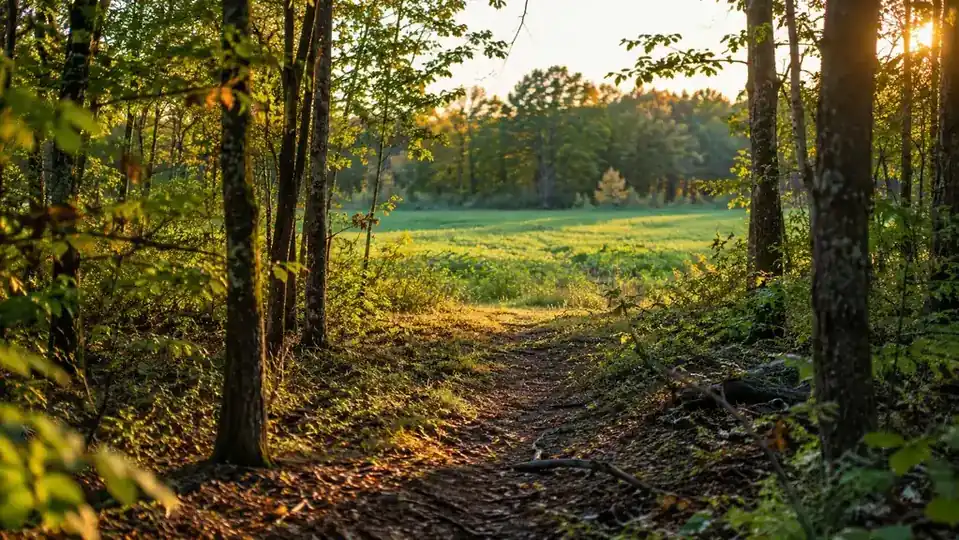
For context, here is my setup. I hunt a mix of public land and a small piece of private timber about 20 minutes from my house. The WOSPORTS has been my main camera on the private ground, watching a well-used trail that connects a bedding thicket to a soybean field. I mounted it at chest height on a maple, aimed slightly downhill, and left it alone for most of the summer.
I check the camera every two to three weeks. That means pulling the SD card, flipping through a few hundred photos in the field, and putting the card back. I have also moved it twice: once when the trail shifted after a logging operation, and once when I wanted to watch a scrape line in late October. This is not a camera that lives in a climate-controlled closet. It gets handled, dropped, rained on, and frozen solid.
In two seasons I have collected roughly four thousand photos and a few hundred video clips. I have seen does, fawns, a couple of shooters, coyotes, turkeys, and more raccoons than I care to count. I have also learned exactly where this camera shines and exactly where it falls short. That is what this review is about.
What the Listing Does Not Tell You About Setup
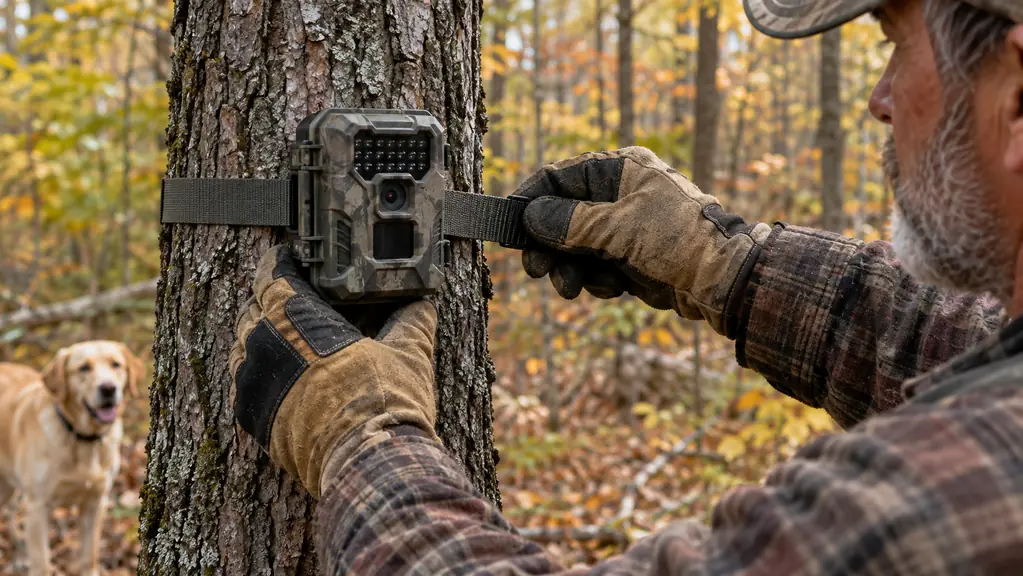
The first thing you notice when you open the box is that the WOSPORTS is genuinely small. That is a feature, not a bug. A camera this size is easier to hide, and it fits in a jacket pocket when you are moving between spots. It also means the strap that comes with it feels a little light at first. Do yourself a favor and add a cheap security cable or run a small padlock through the lock slot. The strap works, but it is not stopping anyone who really wants your camera.
The second thing nobody tells you: bring your own SD card and batteries. The camera does not come with an SD card, and it takes six AA batteries. I run lithium batteries because they hold up in the cold, and I use a 32-gig card, which holds about a month of photos at the settings I use. The manual is the usual tiny print, but the setup is simple enough that you will only need it once.
One quirk worth knowing: the menu system is not what I would call intuitive. The buttons are small, the screen is tiny, and changing settings like photo burst or video length takes some fiddling. Once you set it up the way you like, you will probably never touch the menu again. But the first time, plan on ten minutes of button pushing and a little cussing.
One more setup note: the detection zone is narrower than I expected. The camera covers maybe a 30-foot-wide trail well, and deer walking along the edge of that zone do not always trigger it. I learned to aim the camera where I expect the deer to walk, not at the whole clearing. Point it at the trail, not the scenery.
Image Quality: What 30 Megapixels Actually Means
Let me be straight with you about the 30-megapixel claim. In good daylight, the WOSPORTS takes genuinely sharp photos. I have blown up plenty of them on my laptop to check antler details, and the daytime images hold up better than I expected from a camera in this class. I have even printed a couple of the daytime shots, and they look good on paper too. The color runs a little cool, a little blue in the shadows, but you can easily tell a 4-point from a 6-point. That is the whole job, and it does it.
At night, it is a different story. The infrared LEDs give you clear black-and-white images out to maybe 60 or 70 feet, which is fine for most trail setups. Beyond that, things get soft. You will still see a deer, but you will not always be able to count points or judge his width. If your camera sits on a long field edge and you need to identify deer at a hundred feet, this is not the camera for that spot.
The 30-megapixel number is marketing, plain and simple. The sensor interpolates, and the real-world resolution is about what you get from any modern trail camera. Do not buy this camera for the megapixel count. Buy it because it takes clean daytime photos, acceptable night photos, and does not cost a fortune. Set your expectations there and you will not be disappointed.
The video mode is the same story. In daylight, the 1080P clips are clear enough to watch a buck work a scrape or a coyote trot through the frame. At night, the video gets grainy, and fast movement smears. A deer walking slowly comes through fine. A deer running looks like a blur. If video is your main reason for buying a trail camera, spend your money elsewhere. If video is a nice extra, this one is good enough.
Trigger Speed and the Missed Shots
Here is the honest downside that most reviews skip. The trigger on the WOSPORTS is not the fastest. The spec sheet says a fraction of a second, and in practice I would call it a beat slower than that. For a walking deer, it is fine. The camera catches them. For a deer trotting down a trail, or a buck chasing a doe in November, you will get the back half of the deer or an empty frame where the deer used to be.
I have missed more shots than I like to admit this way. One morning in late October I had a buck walk straight down the trail, and the camera caught his shoulder and rear end instead of his rack. That is frustrating, and I want you to hear it from somebody who actually uses the thing, not from the product page. The worst part is you do not know what you missed until you pull the card, and by then the deer is three counties away.
You can work around it. Set the camera to take a burst of three photos instead of a single shot, which gives you a much better chance of catching something in the frame. I also angle my cameras slightly off the trail instead of pointing straight down it, which gives the trigger a little more time. The burst setting does eat a little more battery and card space, but for me the tradeoff is worth it. A blurry photo of the back of a buck is still more information than an empty frame.
Battery Life and the Minnesota Winter Test
Battery life is where the WOSPORTS surprised me, in a good way. With lithium AAs, I left the camera out from August through November and it never died. I should note that I run mine on a three-shot burst, which uses more battery than a single photo, and it still made it through the season. That is roughly a hundred days of continuous operation, thousands of photos, and a handful of video clips. Plenty of cameras in this class need fresh batteries every three or four weeks.
The Minnesota winter test was the one I worried about most. We get cold snaps down to 20 and 30 below zero, and budget electronics do not always love that. The WOSPORTS kept running. The screen got slow when it was really cold, and the camera felt sluggish for the first few minutes after a deep freeze, but it kept taking photos all winter. One morning in January I drove out when it was 15 below to check it, and the camera had caught a coyote a few hours earlier. It was still doing its job. I cannot ask for more than that.
Waterproofing has been solid too. The camera has a rubber gasket and a latch that seals tight, and it has been through spring downpours without a drop inside. One thing I learned the hard way: make sure the latch is fully closed. If it is not, you will get condensation inside, and that is how you ruin a camera. This one survived my mistake, which says something about the build.
Battery life is where the WOSPORTS surprised me. I left it out from August through November and it never died.
What You Give Up With a Budget Camera
Here is the part of the honest review that matters most. The WOSPORTS Mini has no WiFi, no cellular option, and no app. There is no way to get photos on your phone without pulling the SD card. For some hunters, that is a dealbreaker, and I get it. If you are checking cameras on a big property or hunting out of state, a cellular camera that sends photos to your phone is worth the extra money.
For me, the tradeoff is fine. My camera sits on a small piece of private land, and I am out there every couple of weeks anyway. Pulling a card takes two minutes. The simplicity also means there is less to go wrong. No WiFi module to fail, no app to update, no subscription. The WOSPORTS is a camera that takes pictures when something walks past, and that is the whole deal.
The other thing you give up is fine detail in the build. The plastic housing is solid, but it is not armored. The latch is sturdy enough, and the strap is adequate, but I would not throw this camera in the back of the truck with a pile of chainsaws. It is a tool, not a tank. Treat it with basic respect and it will treat you right.
There is also the time cost. Because there is no app, you only see what the camera caught when you go pull the card. If you are the kind of hunter who wants to know the moment a big buck shows up, that waiting will drive you crazy. I have learned to enjoy it. Checking the card is the closest thing I have to opening a present on a random Tuesday.
What I Liked
- Small and light, easy to hide or carry in a pocket
- Daytime photos sharp enough to count points
- Battery life with lithium AAs lasted a full hunting season
- Waterproofing held up through downpours and a hard winter
- Simple to use once you get past the first setup
- Affordable enough to run several cameras on different spots
Where It Falls Short
- Trigger is a beat slow; you will miss some moving deer
- Night images get soft past about 60 feet
- Menu buttons are small and fiddly
- No WiFi, no app, no cellular; you pull the card yourself
- The 30MP spec is marketing, not real resolution
Who This Is For
Buy the WOSPORTS Mini if you hunt your own land or a small permission, you check your cameras every week or two, and you want to cover several spots without taking out a loan. It is also a great camera for keeping an eye on a driveway, a garden, or a bird feeder. And if you are new to trail cameras and want to learn the ropes without a big investment, this is the camera to start with. The WOSPORTS does not need a cellular plan or a phone app to be useful. It just needs a tree, six AA batteries, and an SD card.
One more thing: this camera is affordable enough that you can run two or three of them for what one premium camera costs, and coverage matters more than camera quality in most scouting. I would rather have three WOSPORTS Mini cameras watching three trails than one expensive camera watching a single trail. That is the real argument for this camera, and it is a strong one.
Who Should Skip It
Skip it if you need photos sent to your phone, because this camera will not do that. Skip it if your camera sits on a long field edge where deer stay past 60 feet at night, because you will not be able to identify them. Skip it if your whole plan is video of fast-moving deer in the dark, because the trigger and the night video are the weakest parts of this camera. And skip it if you want a camera that works with zero fiddling. The setup is not hard, but it is not nothing. For everyone else, this is a solid, honest tool that does what it promises.
Ready to see what is walking past your stand?
The WOSPORTS Mini Trail Camera has earned two seasons on my tree, and I would buy it again tomorrow. Check today's price on Amazon and get one hanging before the season starts.
Amazon Check Today's Price on Amazon →