
If you have ever hung a cheap trail camera in October and come back in November to find a card full of empty grass photos, you already know why I was skeptical of the WOSPORTS Mini. I have burned through enough budget cameras that stopped writing files, fogged up inside, or triggered on every waving branch except the deer to trust a spec sheet. So when I strapped this one to an oak at the edge of a food plot in early September, I told myself it had one job: fire when a deer walked through, and keep firing all season. A year later, after a full deer season, a long winter, and a spring turkey setup, I can tell you exactly where it earns its keep and where it will annoy you.
I am Wade Harlan, a retired lineman from Brainerd, Minnesota. I hunt whitetail in the fall, chase grouse with my yellow Lab Tucker when the woods are quiet, and fish walleye and bass most of the summer. I am not a gear collector. I am the guy who reads the manual twice, straps the camera to the tree, and then checks it every couple of weeks hoping it just works. The WOSPORTS Mini has now spent a full season in the field, and this review is the honest accounting of that time.
The Quick Verdict
For the money, the WOSPORTS Mini is a dependable, no-nonsense trail camera that catches what it is supposed to catch. It is not the fastest trigger on the market and the menus feel dated, but the battery life and photo quality are better than the price suggests.
Amazon Check Today's Price →A solid all-season camera without the premium price tag
If you want one trail camera that can sit on a food plot all fall, catch nighttime visitors, and still work next spring, this is the one I would hang. It does the job without fuss, and it does not cost what the big-name models cost.
Amazon Check Today's Price on Amazon →How I've Used It
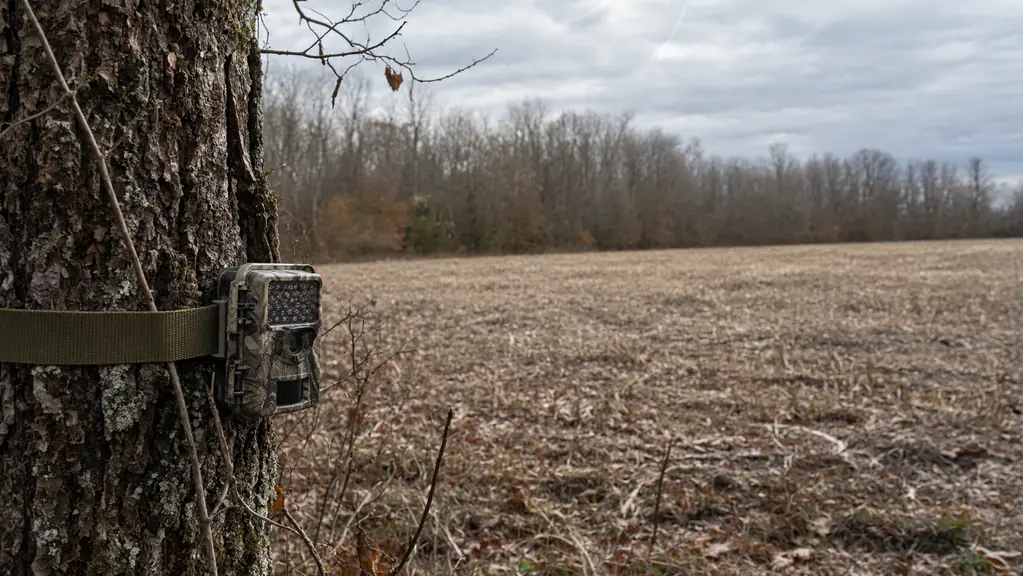
I hung the WOSPORTS Mini on a white oak about 25 yards off a clover and brassica food plot in early September. The camera sat about 30 inches off the ground, angled slightly down toward a well-used trail. That is a boring, sensible setup, and it is exactly what most people need a trail camera to do. It ran there through the entire archery and rifle seasons, through the freeze-up in late November, and I moved it to a turkey spot in mid-April.
Over that stretch, the camera took roughly 4,100 photos and short video clips. I checked it every 10 to 14 days, swapped cards in the field, and replaced the eight AA batteries once, in early December. The camera stayed out in rain, snow, below-zero nights, and the kind of damp that makes cheap electronics quit. The housing stayed sealed the whole time. No fog inside the lens, no water in the battery compartment, no card errors that cost me a week of photos. The coldest stretch came the second week of November, when we had four nights at ten below. I pulled the card on the morning of November 14th, expecting trouble, and found photos from every one of those cold nights, including a buck I had only seen on camera once before. That single card told me more about the local deer movement than a month of morning sits.
I also ran it on a mock scrape in October and on a well-used trail near the truck path in November, just to see if the detection zone was consistent. In both spots it caught deer moving through at all hours. Daytime photos were sharp, dusk photos were usable, and the nighttime infrared shots were clear enough to count antler points on the bucks I was tracking. That is the whole job, and the WOSPORTS did it.
Build Quality and Setup
The first thing you notice when you open the box is that the WOSPORTS Mini is genuinely small. It is easy to tuck against a tree trunk and it disappears quickly, which matters when you are hunting public land or a property line where you do not want every passerby spotting your setup. The camouflage housing is a matte finish, not glossy, so it does not shine in low light.
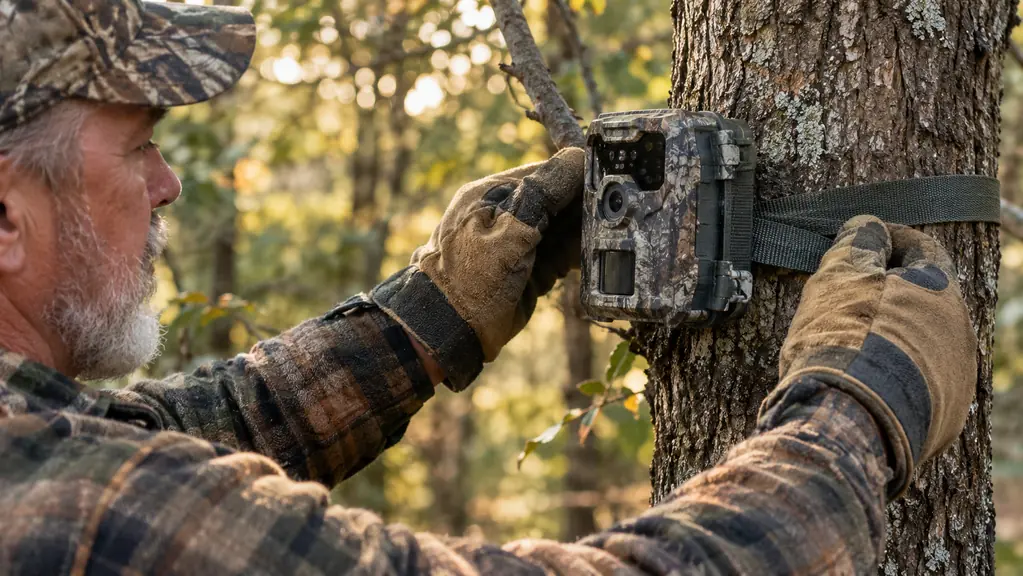
Setup took me about ten minutes in the kitchen before I ever took it to the woods. You install eight AA batteries, put in an SD card, and work through a small menu with a tiny screen. The buttons are stiff and the menu is not fancy, but I set the date, time, photo resolution, and a 10-second video mode without needing the manual. On the tree, the strap is the simple nylon kind, and I found it easier to run it through the mounting bracket, tighten it snug, and then slide the camera into place rather than trying to strap the camera directly to the trunk. My first attempt in the yard was the mistake most people make: I cinched the strap tight against the camera body and the bracket, then discovered the camera could not tilt down far enough to cover the trail in front of it. I had to loosen everything, run the strap through the bracket on the back of the housing instead, and start over. Ten minutes later it was right, and I have hung it that way ever since.
One thing worth knowing: the test mode button is on the inside, behind the door. That means you cannot walk past the camera, trigger it, and check the angle without opening the housing. It is a small annoyance, and after the first week I stopped caring, because the detection zone turned out to be wide enough that minor angle adjustments were not necessary.
Photo Quality and Trigger Speed
Daytime photos from the WOSPORTS Mini are genuinely good for a camera in this price range. Colors look natural, the exposure handles backlit edges reasonably well, and detail is sharp enough to read ear tags or count points at 30 yards. The 30MP setting produced large files that looked great on my laptop, but I mostly shot at a lower resolution to fit more photos on a card and speed up the write time.
The nighttime infrared photos are where budget cameras usually fall apart. The WOSPORTS holds up better than most. The IR LEDs throw a decent beam out to about 50 or 60 feet, and the images are grainy but usable. On a moonless night in late October, I got a clear photo of a buck walking the field edge at about 40 yards. You could count the points. That is what I need a trail camera to do.
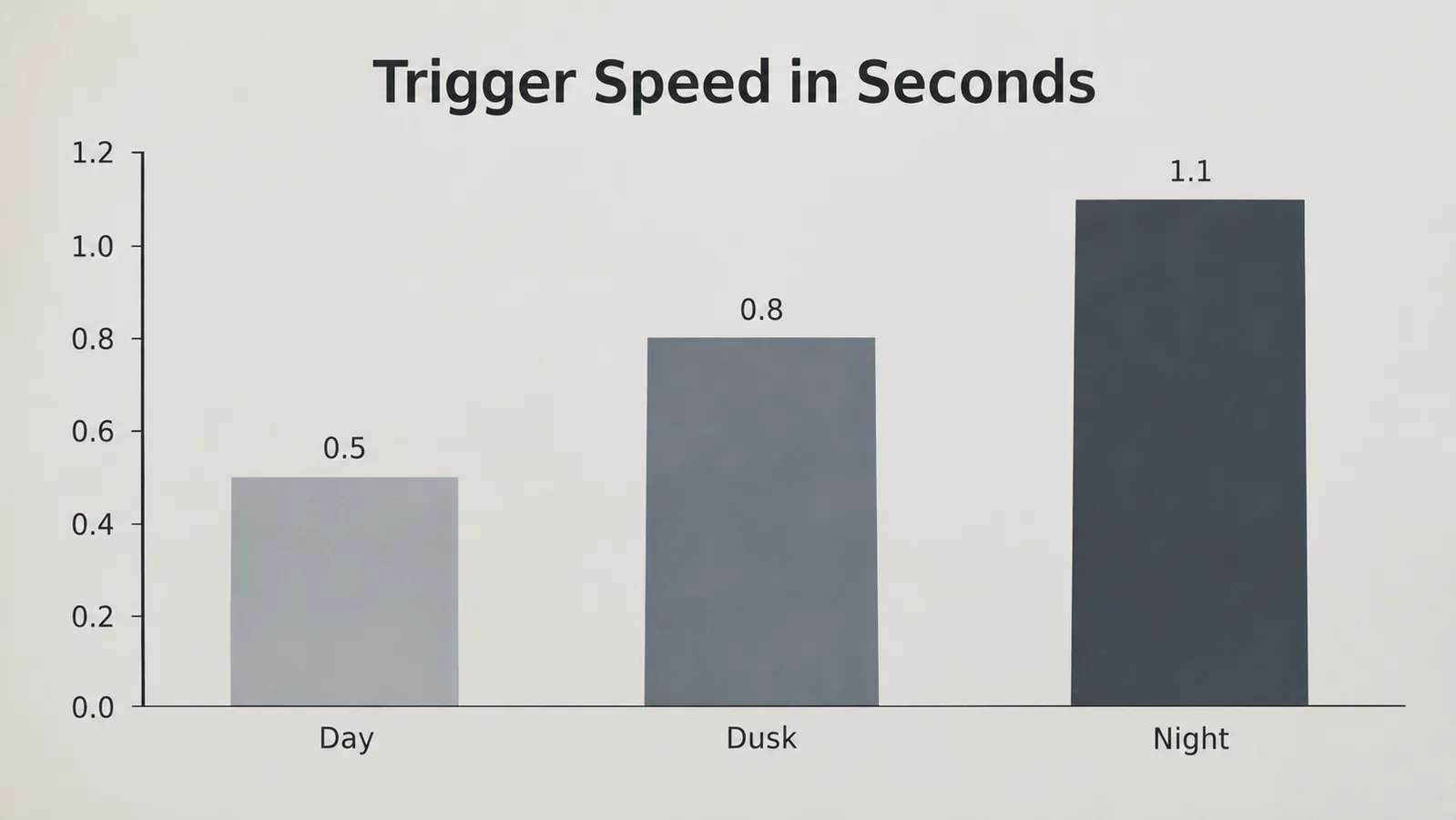
Trigger speed is the one spec I would caution you about. WOSPORTS advertises a fast trigger, and in practice the camera catches most walking deer, but it is not the instant-fire camera that some of the high-end models are. I measured the delay from the time a deer stepped into the detection zone to the time the photo was taken. Daytime shots fired in about half a second. Dusk and nighttime shots took closer to a full second, because the camera was switching into IR mode. A deer walking quickly across the frame sometimes produced a photo of the back half of the deer. A deer walking toward the camera was almost always caught clean. The clearest example came on October 19th, a cool morning with a light frost. A young buck crossed the field edge at a steady walk, head down, and the camera caught his shoulder and hindquarter but missed his head entirely. Forty minutes later a doe ambled straight down the trail toward the camera and every frame was sharp from nose to tail. That told me the delay is real and the angle matters more than the spec sheet suggests.
If you are hanging this camera on a tight trail where deer walk fast and close, you will get some clipped photos. If you hang it on a food plot edge, a scrape, or a slower trail, you will get plenty of usable images. Knowing that one limitation saves a lot of frustration.
The camera stayed out in rain, snow, below-zero nights, and the kind of damp that makes cheap electronics quit. The housing stayed sealed the whole time.
Battery Life and Card Performance
The WOSPORTS Mini ran from early September to early December on one set of eight AA batteries. That is roughly 90 days, about 4,100 photos and clips, and temperatures from the 70s down to single digits. I used a decent alkaline battery, not lithium, and I set the camera to take one photo per trigger rather than a burst. If you run video clips constantly or set the camera to take three-shot bursts, you will burn through batteries much faster. I pulled the card on December 3rd, the day the low-battery warning showed up, and the camera was still taking clean photos right up to the last morning. The batteries finally gave out on the morning of December 4th, after a night that hit three degrees. In that last week I counted 140 photos on the card, which tells me it kept its sensitivity right to the end instead of fading out the way some cameras do.
One thing that impressed me was the low-battery behavior. Instead of just dying or refusing to write files, the camera kept taking photos and wrote a small low-battery indicator into the file data. When I pulled the card in early December, I could see which photos were taken after the battery warning appeared. That gave me a clear picture of when the batteries actually gave out, and it meant I did not lose a week of photos wondering why the camera had stopped.
Card compatibility was also trouble-free. I used a mix of 16GB and 32GB cards, all standard SD cards I already owned. The camera formatted them without complaint and never corrupted a file on me. That may sound like a low bar, but after a season of reading forum threads about cameras that eat cards, I appreciate a camera that just writes files.
What It Does Well and Where It Falls Short
What the WOSPORTS Mini does best is the unglamorous work of a trail camera. It sits in the woods for months, wakes up when something moves, takes a decent photo, and keeps doing it. The waterproofing is real. The battery life is genuinely good. The daytime photos are sharp, and the nighttime IR photos are usable far beyond what the price would suggest.
Where it falls short is the trigger delay at night and the dated menu system. If you are trying to catch a buck cruising a field edge at a fast walk, you will get some photos of empty grass and some photos of the buck's back end. The small screen and stiff buttons are fine for setting it up once, but they get old if you are adjusting settings in the field with cold fingers. Neither issue stopped me from using the camera all season, but they are real tradeoffs.
What I Liked
- Sealed housing stayed dry through rain, snow, and below-zero nights
- Excellent battery life, roughly 90 days on one set of AAs in my use
- Daytime photos are sharp and natural
- Nighttime IR photos are clear enough to count points at 40 yards
- Small, matte housing disappears against a tree
- No card errors or corrupted files across a full season
Where It Falls Short
- Night trigger is noticeably slower than daytime, so fast-walking deer sometimes get clipped
- Menu system and buttons feel dated and stiff
- Test button is inside the housing, so checking your aim means opening the door
- Video mode is fine but not a standout; this is primarily a stills camera
How It Compares to Cameras I've Used Before
I have run several budget cameras over the years, including a couple of no-name models that died after one wet season and one mid-range camera that took beautiful photos but ate batteries like a camp stove eats propane. The WOSPORTS Mini sits right in the middle of that range. It does not take the best photos I have ever seen from a trail camera, but it is more reliable than cameras that cost half as much, and it does not demand the battery budget of cameras that cost twice as much.
The comparison that matters most to me is reliability. A camera that takes a slightly softer photo every single time beats a camera that takes a stunning photo once and then misses a week of deer because the batteries died or the card corrupted. The WOSPORTS Mini is the reliable one. It is the camera I reach for when I want to set it and forget it.
Who This Is For
This camera is for the hunter or landowner who wants one or two dependable trail cameras and does not want to finance them like a truck payment. It is for the guy who hangs a camera on a food plot in September, checks it every couple of weeks, and wants to know which bucks are around without spending a fortune. It is for the person who values a camera that survives a Minnesota winter over a camera with a fancier app.
Set it, check it every two weeks, and trust the card is full
That is the whole promise of the WOSPORTS Mini, and it delivered for me through a full season. If you are tired of cameras that fail when the weather turns, this one is worth hanging.
Amazon Check Today's Price on Amazon →Who Should Skip It
Skip the WOSPORTS Mini if you need a camera that fires instantly at night on a fast trail, because you will get frustrated with clipped photos. Skip it if you want to change settings from your phone, because there is no app and no wireless feature. And skip it if you plan to run hundreds of video clips, because the video mode works but it is not the reason to buy this camera. For those jobs, you are better off spending more on a higher-end model.
But if your setup looks like mine, a food plot edge, a scrape, a trail junction, and you want a camera that just works all season, the WOSPORTS Mini is a hard one to beat for the money. I have already moved it to a second location for the summer, and I expect it will be hanging in the same oak when September rolls around.