
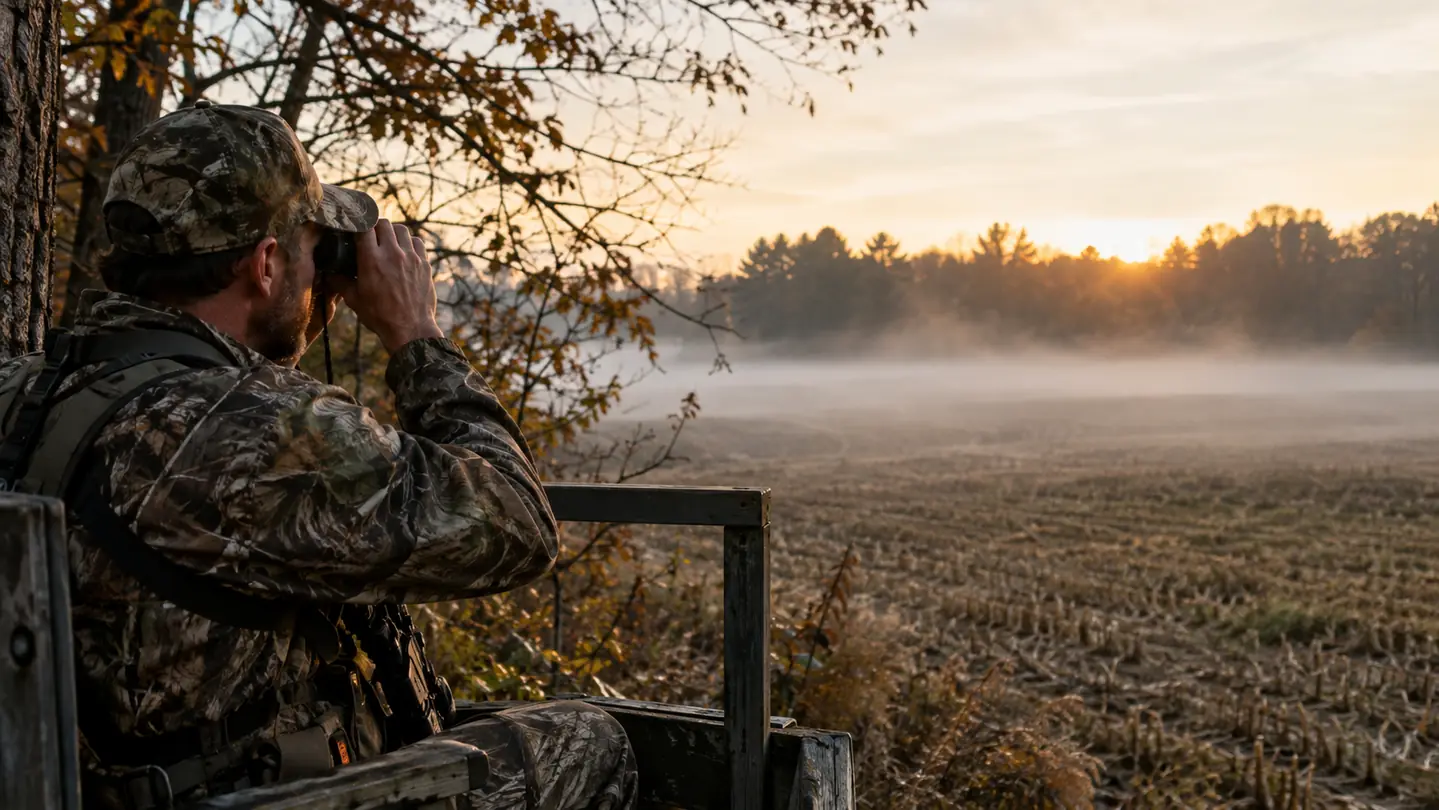
Last October I watched a buck work his way across a cut cornfield in the last ten minutes of shooting light. I raised my rangefinder, and it gave me nothing. No reading, just a blank display and a faint beep, so I held on a guess that turned out to be about twelve yards wrong. That buck never gave me a second chance. I sat in the truck that night with Tucker's chin on my arm and decided I was done carrying gear that quits when the light gets hard. The next week I ordered the TIDEWE Hunting Rangefinder, and it has been on my hip ever since.
Here's the short version. The TIDEWE has now been through three Minnesota seasons with me, whitetail in the fall and grouse in the brush, walleye and bass from my 16-foot aluminum boat all summer, and it has never once left me guessing. I've ranged deer at dawn, ranged fence posts in flat gray light, ranged the far bank of the river from the boat, and it gives me a number every time. I also spent three weeks this fall comparing it side by side with a premium unit, my hunting buddy's Leupold RX-1400i, and here's what I found. The TIDEWE does everything most hunters need a rangefinder to do, for a fraction of the money. The Leupold does a few things better, and I'll tell you exactly what they are, because you deserve an honest answer either way. If you already own a premium rangefinder, nothing here is going to talk you out of it. If you're shopping with a budget and a hunting trip in front of you, pay attention to the part where the cheaper one beats the expensive one.
How I Compared Them
I ran both rangefinders through the same test over three weeks in September. Same fields, same stands, same fog. I ranged the same fence posts, the same treeline, the same buck decoy set out at measured distances across a picked bean field. I used both in the last minutes of legal light, in a drizzle, and in that flat gray overcast that makes cheap glass go dark and dead. I also used them the way a hunter really uses them, from a stand with my heart still pounding, one hand on the bow, the rangefinder bouncing in the other. I ran the whole test twice, once in the first week and again after a hard rain, to make sure I wasn't just getting lucky with a fresh battery in one unit and a tired one in the other.
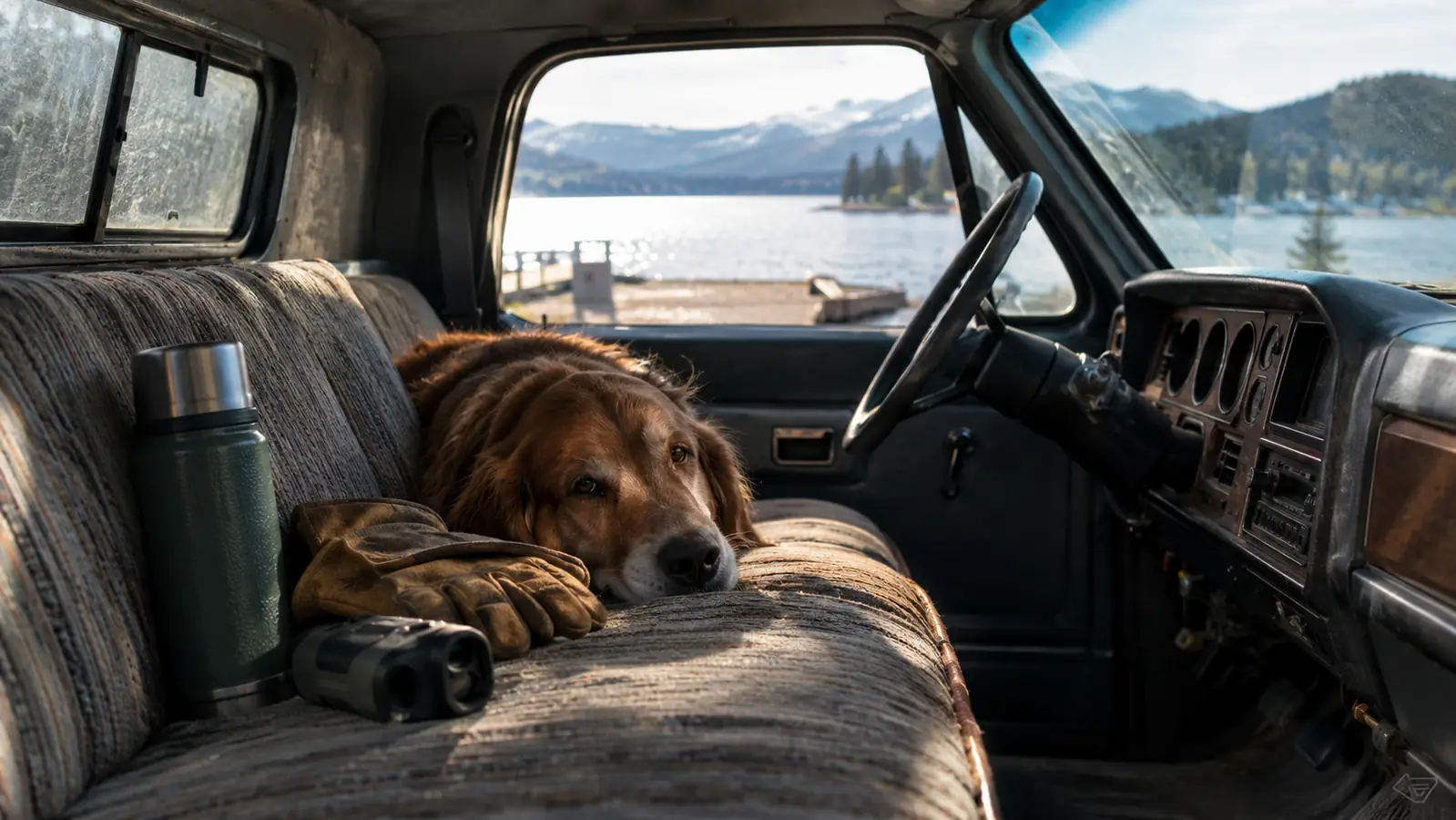
The Leupold belongs to my hunting buddy, and he treats it like it was issued by the military. It lives in a padded case and goes back in the same spot every time. The TIDEWE I bought myself, and it rides loose in the door pocket of my old 4x4 between a strap wrench and a coil of rope. It gets rained on, knocked around, and occasionally stepped on by a 75-pound yellow Lab who thinks every piece of gear is a toy. I charged it once before the season opened, and it is still showing a full battery going into November.
One more thing before the table. I did not test these in a lab, and I'm not going to pretend I measured beam divergence with a micrometer. I tested them the way you'll use them, from the positions a hunter actually shoots from, and I recorded the number each one gave me at known distances. That's the test that matters. And to be upfront about it, I have no stake in whether you buy either one. I'm not a brand ambassador. I'm a retired lineman who hunts and fishes and got tired of guessing yardage.
| TIDEWE Hunting Rangefinder | Leupold RX-1400i | |
|---|---|---|
| Price | Easier on the wallet, plain and simple | A serious investment, the kind you keep for twenty years |
| Max range | 700 yards on deer, 1,000 on reflective targets | 1,400 yards on reflective, and it reaches deer far past any shot I'd take |
| Low-light glass | Good enough to use until legal shooting light ends | Noticeably brighter, holds a clear picture longer into dusk |
| Power | Rechargeable, charge it a couple times a season | CR2 battery, you'll want spares in your pack |
| Angle compensation | Straight-line distance only | TBR technology corrects for uphill and downhill shots |
| Warranty | Standard limited warranty | Lifetime warranty, and they stand behind it |
| Simplicity | One button, no menus to get lost in | More modes and buttons to learn |
Where TIDEWE Wins
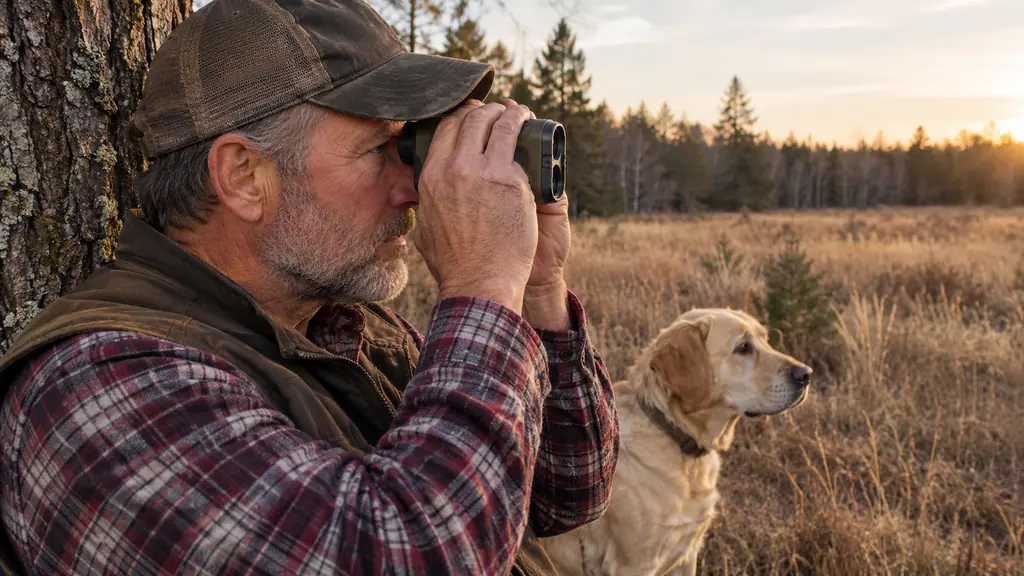
The first place the TIDEWE wins is the one that matters most to working folks, and it's the price. I'm not going to quote numbers here, you can check today's price yourself, but the TIDEWE costs a fraction of what the Leupold does, and for that money you get a rangefinder that locks onto a deer at every distance I actually shoot. My whitetail shots happen inside 200 yards, and inside 200 yards both units hand me the same number. The Leupold is nicer glass, but it doesn't range a deer any deader at 180 yards. I've ranged the same buck decoy at that distance with both, and the number on the display is the same number. That's the job.
The second win is the battery. The TIDEWE charges with the same USB cord I use for my phone, and I plug it in while I'm rinsing the boat and it's done. The Leupold takes a CR2 battery, which means a trip to the hardware store and a spare rolling around in my glovebox for the rest of the season. The TIDEWE is also dead simple to run: one button, one number, done. No scrolling through modes with cold fingers in the dark. When a buck is standing at the edge of the field and the light is going, simple wins. That's not a small thing.
There's a third win that's harder to put in a spec sheet. Because the TIDEWE is cheaper, I actually carry it. It rides in the door pocket, it hangs on a lanyard around my neck on every grouse walk, it goes in the boat box with the spare hooks. The Leupold mostly stays in its padded case in the house, because I'd hate to lose a piece of gear that costs that much. A rangefinder you leave at home ranges exactly nothing. The TIDEWE gets used, and using it has made me a better shot at distance.
Where Leupold Wins
Now I have to be honest, because a comparison that pretends otherwise is just an ad. The Leupold has better glass, and it's not close. In the last ten minutes of legal shooting light, when the TIDEWE image starts to gray out and get soft, the Leupold stays bright and sharp. That's not a small thing if you hunt late or hunt timber. It's the difference between reading a buck's body language through the lens and just watching a shape move through the brush. If I hunted the thick stuff every evening, that clarity would be worth the money all by itself. And for what it's worth, the difference showed up on paper too. In my notes, the Leupold gave me a clean reading in light where the TIDEWE needed another minute of daylight.
The Leupold also reaches further, out to 1,400 yards on reflective targets, and it corrects for uphill and downhill shots with its TBR system. If you hunt mountain country or take long shots across canyons, angle compensation is worth real money, because a straight-line reading on a steep slope will lie to you about how far that shot really is. And the Leupold carries a lifetime warranty from a company that has been building optics for generations. My hunting buddy will hand his to his kid someday, and it'll still work. That's a real thing, and it's worth paying for if you plan to own one rangefinder for the rest of your life.
Inside 200 yards, both units hand me the same number. It's the last ten minutes of light where the Leupold earns its keep.
Get honest yardage without the premium price tag
If your shots happen inside 300 yards and you'd rather spend the difference on gas, tags, and a better pair of boots, the TIDEWE is the one that rides in my truck. See today's price on Amazon and judge it for yourself.
Amazon Check Today's Price on Amazon →Who Should Buy Which
Here's how I'd settle it if you were standing at my kitchen table with a cup of coffee. Buy the TIDEWE if you're a whitetail or bird hunter who shoots inside 300 yards, wants a rangefinder that just works, and would rather put the savings toward license fees, a corn feeder, or a new string for your bow. Buy the Leupold if you hunt mountain country, take long shots across open ground, or want one piece of gear you can hand down and never think about again. And if you're somewhere in between, buy the TIDEWE, use it for a season, and upgrade later if you ever actually need to. You'll have spent a lot less to learn what you really need.
Neither answer is wrong, and I mean that. I own the TIDEWE, and after three seasons I'd buy it again tomorrow. But I've also stopped pretending the Leupold isn't the better optic. It is. It's just not several times better for the way I hunt. The premium unit earns its money in conditions I don't hunt in, at distances I don't shoot, in a price bracket I don't need to live in. The TIDEWE earns its money every single time I pull it out of the door pocket.
The Specs That Matter
Here's what you're actually getting with the TIDEWE. It reads out to 700 yards on a deer-sized target and 1,000 yards on reflective surfaces, which is plenty for any shot I'll ever take in Minnesota. It's rechargeable through a USB port, so you're not feeding it batteries all season. The display is bright and easy to read, and there's a scan mode that keeps updating the distance as you pan across a field, which is handy when a deer is moving through cover.
It's also sitting at 4.7 stars from more than six thousand buyers on Amazon. I don't put a lot of weight on review counts, but six thousand people is a lot of trigger time, and the pattern in those reviews matches what I've seen: it works, it holds up, and the few complaints are mostly about the glass in low light, which I already told you about. That's a healthy sign. A product with six thousand reviews and a 4.7 average is not a product that's failing people.
A Few Honest Complaints
No review is honest without complaints, so here are mine. The TIDEWE's glass gets soft in the last few minutes of legal light, and you need to know that going in. It's fine at dawn and fine in the middle of the day, and it will get you a number at dusk, but it's not premium glass. The eyecup is also a little stiff when it's cold out, and the included lanyard is nothing special. I replaced it with a cord I already had. Small things, but they're real.
The other complaint is the manual. It covers the basics but it's thin, and the mode button can be confusing until you've played with it for an afternoon. Once you understand that it's really a one-button tool with a couple of extra modes you can ignore, it's fine. But I'd rather tell you that up front than have you find out at 6:40 in the morning with a buck in front of you. Once you get past that, it's genuinely a simple tool. Simple doesn't mean you won't curse at it the first time you use it in the dark.
The Bottom Line
A rangefinder has one job: give you a number you can trust when the light is going and the deer is moving. The TIDEWE does that job for me, season after season, for a price that doesn't hurt. The Leupold does it with better glass and a longer reach, and if that matters to you, you already know it does. For everyone else, the TIDEWE is the honest answer. It's the one I grab out of the door pocket, it's the one I hand to a friend who asks what to buy, and it's the one I'd buy again. That's the test that matters, and it's the one the TIDEWE keeps passing.
Start with the rangefinder that does the job
Three seasons in, the TIDEWE has never left me guessing. Check today's price on Amazon and see if it fits your hunting kit.
Amazon Check Today's Price on Amazon →