
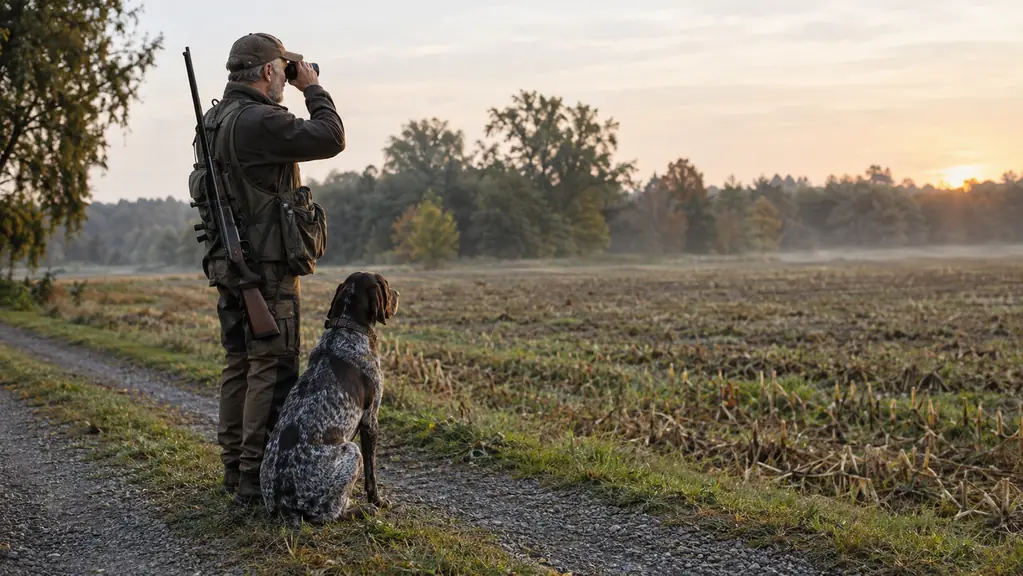
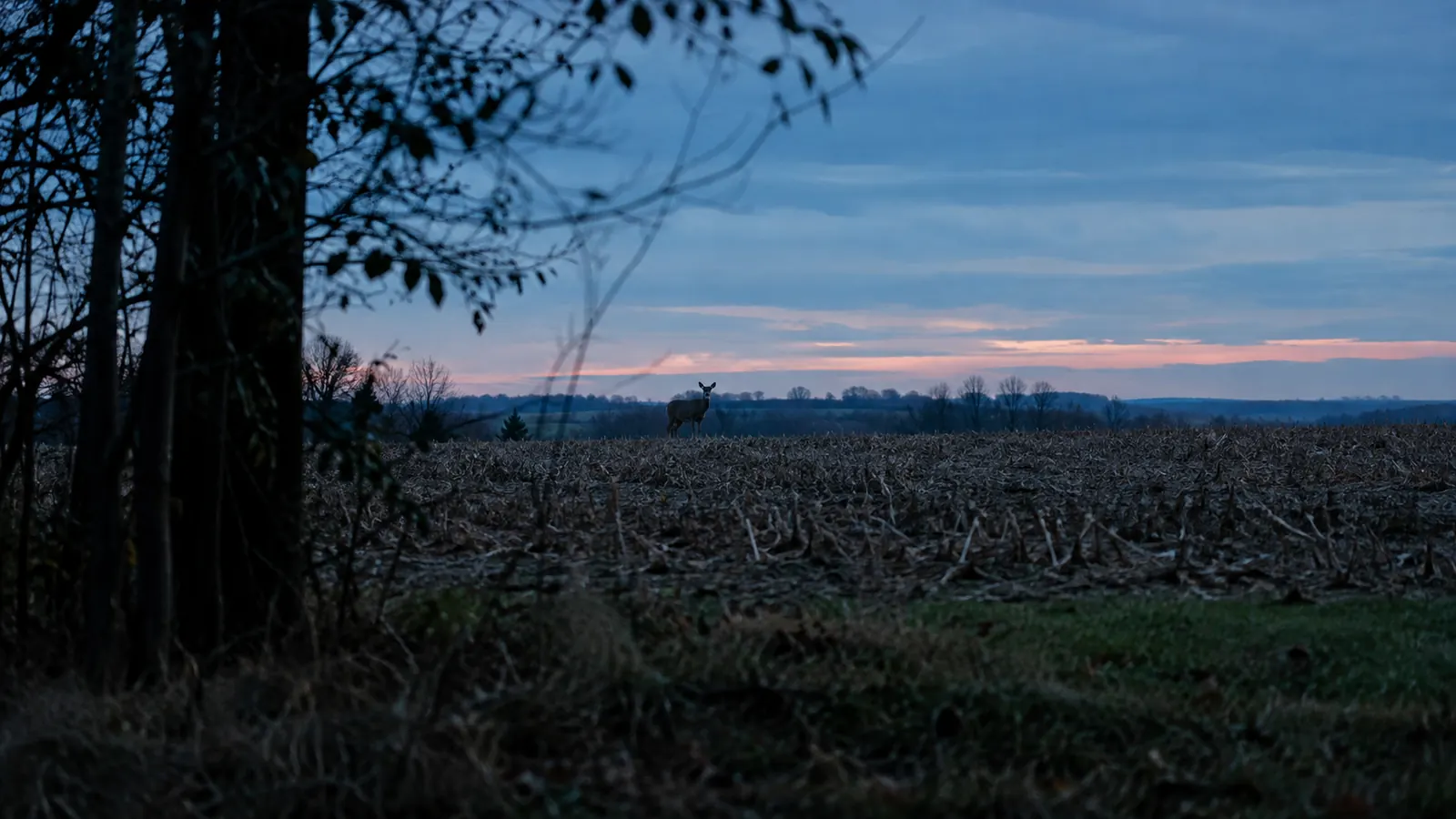
Some of the best gear advice I ever got came from a shot I never took. Last November, opening weekend of rifle season, I had a buck in the far corner of a picked cornfield. My eyes said 250 yards, maybe a little less. The TIDEWE rangefinder said 327. I lowered the rifle, watched him feed for another ten minutes, and let him walk.
That is not the ending you expect from a gear writeup, I know. Most of these start with a buck on the tailgate and end with a link. But that rangefinder earned its spot in my pack on the days it told me not to shoot. It is easy to be honest with yourself at 40 yards over open ground. It is harder at 300, in fading light, when the deer in the scope is the biggest one you have seen all season. A rangefinder that tells you the truth in that moment is worth the pack weight.
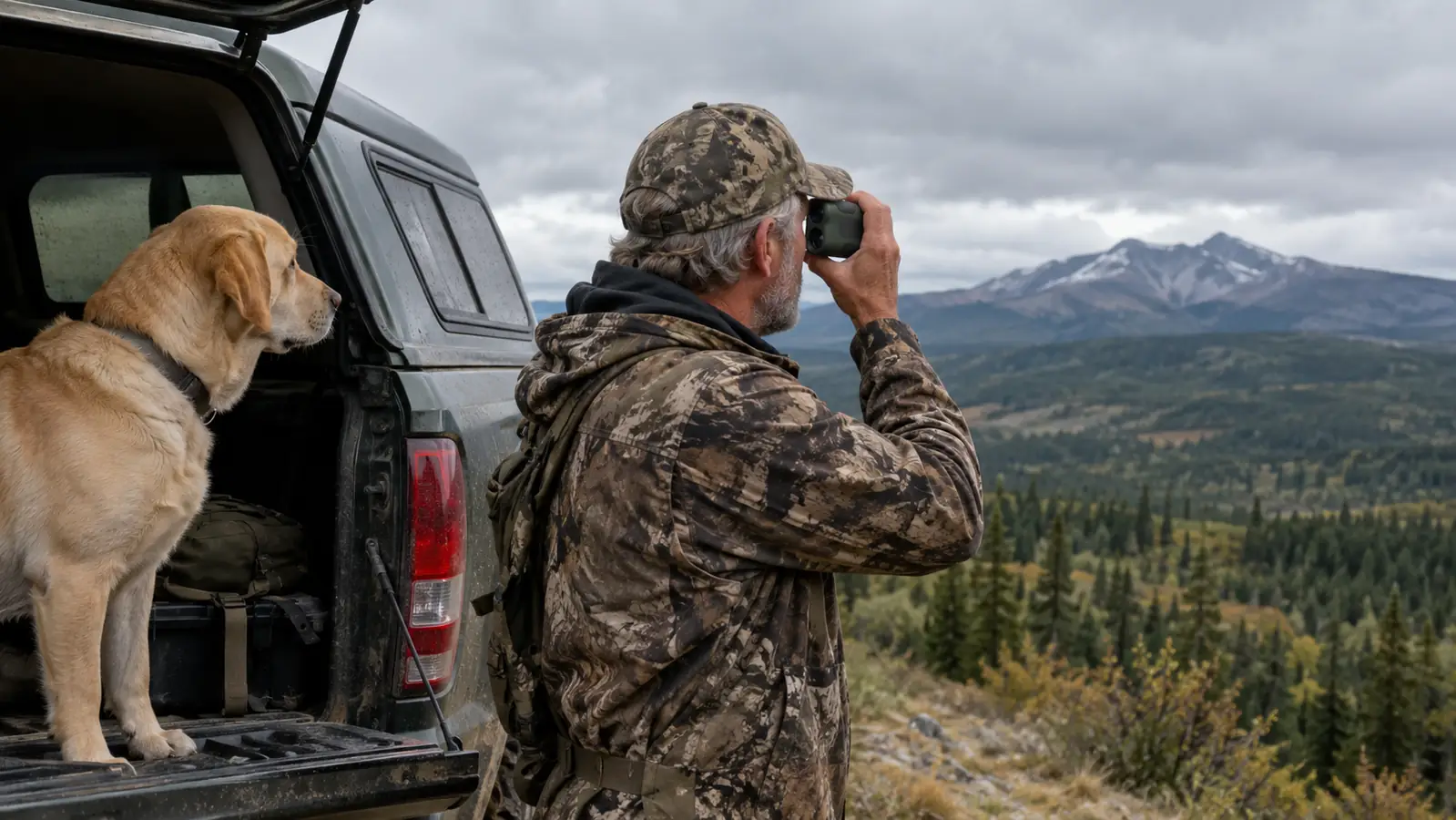
I am Wade Harlan, 58, a retired lineman who hunts whitetail and grouse around Brainerd, Minnesota, and fishes walleye and bass on the local lakes when the season turns. I did not buy the TIDEWE because I needed another gadget. I bought it because I was tired of guessing. My eyes are not what they were at 40, and every fall the corn gets cut earlier and the shots seem to get longer.
TIDEWE calls this a 700/1000-yard rangefinder, rechargeable, compact enough to ride in a vest pocket. I have had mine for the better part of a year. It has been on grouse hunts, in the deer stand, and across a couple of evenings on the lake when I wanted to know how far the far bank really was. It rides in the center console of my old 4x4 with the topper, and it has survived the wet-dog, coffee-spill, gravel-road test that kills most electronics around here.
The specs are easy to like. More than six thousand reviews on Amazon, a 4.7 average, most of them from hunters who sound like they actually hunt. But numbers on a screen are cheap. What I care about is whether a rangefinder gives the same answer twice, and whether that answer is the truth. I have checked the TIDEWE against a tape measure on a measured field edge and against paced-off fence lines, and it has agreed every time. I have also checked it against my buddy's laser, and the two agree within a yard or two. Close enough for any shot I take.
It told me 327 yards when my eyes said 250, and it agreed with the tape every time I checked.
Know the distance before you squeeze.
I tested mine against a tape measure before I trusted it in the field. If you are still guessing at 300 yards, give the TIDEWE a serious look before season opens.
Amazon Check Today's Price on Amazon →The shot I did not take taught me something else. This rangefinder does not flatter you. It will not hand you a friendly number so you can talk yourself into a shot you should not take. It gives you the truth, and in hunting the truth is what keeps you from wounding an animal and still walking home empty-handed. That is a feature no one puts on the box.
It has quirks, and I would be lying if I said otherwise. In heavy fog or the last ten minutes of light, the display can be slow to settle. I have had it refuse a reading on a dark deer in thick brush when the background was all one color. The buttons are small enough that I have to pop my glove off to change modes. None of that has ever made me wish I had gone back to guessing. I keep it on a lanyard now, because a rangefinder in a coat pocket with a set of keys is a scratched lens waiting to happen.
The battery is the part I did not expect to love. It charges with a USB cord, and one charge has lasted me from early September through the end of rifle season. My old rangefinder ate coin cells, and they always died at the worst possible moment. This one hangs on a lanyard or rides in my vest pocket, has been rained on, banged against the truck door, and stepped on by Tucker, my 75-pound yellow Lab, who treats every piece of gear as a retrieve. It still gives the same answer.
I have also used it from my 16-foot aluminum boat, which is not what TIDEWE sells it for. When my fishing buddy and I want to know whether we can cast across a bay, or whether that point is worth the row, the rangefinder settles the argument in about two seconds. It is not a fishing tool. It is a distance tool, and distance matters on the water more than most of us admit. Last spring I used it to settle an argument about whether a walleye point was worth moving the boat for. It was. Partial credit to the rangefinder.
Who should buy it? Anyone who hunts open country, field edges, or cutovers where distances are easy to misread. Who should skip it? If you hunt tight woods and never take a shot past 60 yards, you can leave it in the truck. For the rest of us, the middle ground between close timber and wide prairie, a rangefinder is the difference between a clean kill and a long, guilty walk.
What I'd Tell You If We Were Sitting at My Kitchen Table
If we were sitting at my kitchen table, coffee going, Tucker asleep on the rug, here is what I would say. You do not need the most expensive rangefinder on the shelf to hunt well. You need one you trust, one that gives you the same honest answer on the first day of the season and the last. The TIDEWE is that, for me. It will not make you a better shot. But it will stop you from taking the shots you should not, and that alone will make you a better hunter. That is worth more than any feature on the box. And if you wonder whether a rangefinder is worth carrying, ask yourself how many times last season you guessed wrong and watched a deer walk. I got tired of that math.
Get the honest yardage this season.
It rides in my pack on every hunt now. If you are still trusting your gut at long range, this is the simplest fix I have found.
Amazon Check Today's Price on Amazon →