

Most of the gear in my pack got there after a bad guess. I bought my first rangefinder on a whim the way a lot of us do, figured it was close enough, and trusted it across a picked cornfield on the third morning of deer season. It was not close enough. That buck walked off at what I thought was 280 yards and turned out to be a comfortable 210, and I threw a shot over its back. That miss is the reason I spent last fall running the TIDEWE Hunting Rangefinder through a real season instead of just toting it to the range once.
I am Wade Harlan, a retired lineman who lives outside Brainerd, Minnesota. I hunt whitetail and grouse in the fall and fish walleye and bass through the summer, and my yellow Lab Tucker rides along for most of it. My standards for gear are simple: it has to work at first light in November, survive a wet dog in the truck, and still be doing its job in year three. The TIDEWE rangefinder has now been through all three of those tests.
The Quick Verdict
A rechargeable rangefinder that reads fast, holds its charge for weeks, and forgives a shaky hand. It is not built for extreme long-range work, but for deer and bird hunting it delivers far more than its price suggests.
Amazon Check Today's Price →The rangefinder that rode in my pack all season
I kept this one in the pack from September through December. Here is how it earned that spot, and where it let me down.
Amazon Check Today's Price on Amazon →How I've Used It
This wasn't a bench test. I carried the TIDEWE on every hunt from the first weekend of archery season through the tail end of muzzleloader. That meant mornings in the teens, afternoons in a cold drizzle, and a lot of time bouncing in the truck with Tucker's wet paws and a topper full of gear. It rode in the front pocket of my pack, got dropped on frozen ground more than once, and spent a couple of nights in the cab when I forgot to bring it inside.
Most of my whitetail setups are 100 to 300 yards, across a picked field or down a logging road. The rangefinder's job is simple: give me a number I can trust before I decide whether to shoot. On the grouse side, it got used less, mostly to check distances on open alder runs and to keep me honest about how far Tucker was working. Honestly, for grouse it is overkill. For whitetail it earns its keep every sit.
I also spent one afternoon at the local range comparing it side by side with a friend's much more expensive unit, ranging fence posts and a steel plate at measured distances. I wanted to know whether the TIDEWE was just close or actually right. That test told me a lot, and I get into it below.
The morning that sold me came in late October. A buck stepped out of the brush line at the far edge of a picked soybean field, and I had maybe ninety seconds before it disappeared into the next draw. I put the rangefinder on it, got a reading of 247 yards, settled the crosshairs, and made the shot. One reading, one shot, done. That is exactly what I ask of the tool, and it delivered every time I asked this season.
In total, I probably used it on forty or more sits and walks. Some days it got pulled out a dozen times. Other days it stayed in the pack and I never touched it. That is the right pattern for a rangefinder: it should be there when you need it and not get in the way when you don't. This one fit that pattern better than anything I have carried.
The Specs That Matter in the Field
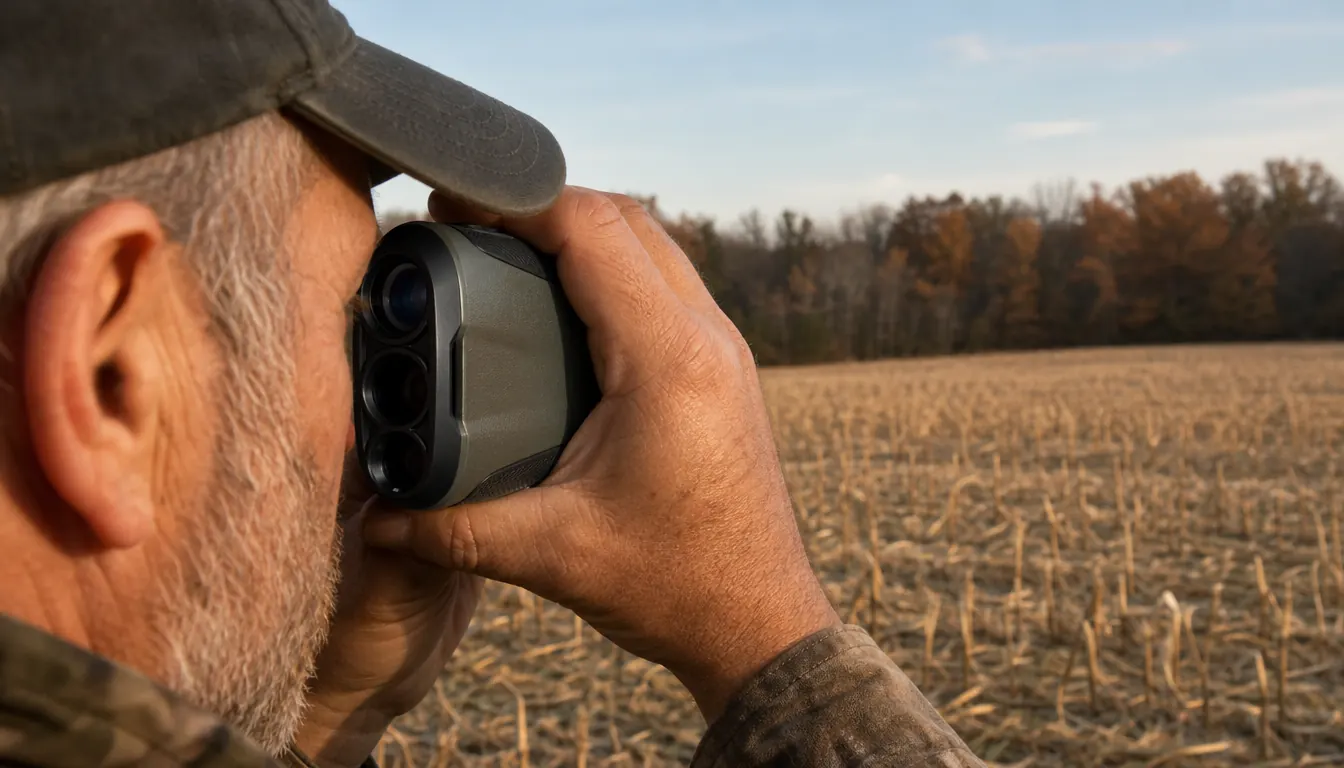
The 700/1000Y version of this rangefinder covers more distance than I have ever needed in Minnesota. My shots are 300 yards and in, and it reads those instantly. What matters more to me is that it reads them right the first time, and it did all season. On a measured 210-yard fence post it said 211. On the 300-yard steel it said 299. That level of agreement is all a deer hunter needs.
The display is the part I notice every time I use it. It is bright enough to read in the low light of last legal shooting time, and the numbers are big enough that I don't have to squint through my reading glasses. The button sits right under my index finger, and it takes a firm click, which means I don't accidentally range the sky when I'm cold and clumsy.
The housing is camo, which is what the model name promises, and it has taken a beating without cracking. The glass is clear enough to pick out a buck in a brush line at 200 yards, though it is not in the same league as the high-end glass my buddy carries. That is an honest tradeoff at this price point, and I will get back to it.
One thing I appreciate is the eye relief. I wear glasses when I hunt, and a lot of rangefinders force me to mash my eye against the cup or take my glasses off entirely. This one lets me see the full display with my glasses on, which sounds like a small thing until you are trying to range a buck in fading light.
It also forgives a shaky hold. A rangefinder only helps if you can keep it on the target long enough to get a number, and mine gets used in cold weather with adrenaline running. The reading locks in fast, so I don't need a rock-solid rest to trust it.
A Season of Carries: How It Held Up
The real test was the everyday stuff. The rangefinder got knocked off the truck seat when Tucker climbed over it. It sat in a pack pocket with a box of shells and a sandwich. It got rained on during a slow morning in October and frozen overnight in the cab. I did nothing special to protect it, and it never missed a beat.
The only wear I can point to is cosmetic. The camo coating shows a few scuffs from riding against buckles, which is normal for anything that lives in a hunting pack. Functionally, it works today exactly like it did in September. The buttons still click, the display is still bright, and the battery indicator still matches reality.
Tucker also gave it a durability test that I didn't plan. He knocked it off the tailgate onto gravel while I was unloading gear, and it landed lens-down. I expected a scratch or a cracked housing. There is a small scuff on the eyecup and nothing else. The glass came through clean.
It came with a lanyard, and I used it more than I expected. When I am walking a grouse run with the rangefinder in one hand and my gun in the other, that lanyard keeps the unit from hitting the ground every time I switch hands. Small detail, but it shows the maker thought about how the thing actually gets used.
Battery Life and the Rechargeable Question
The rechargeable battery is the feature I was most skeptical about, because a rangefinder with a dead battery is just a paperweight. I charged it once in early September and once more in early December. That is three months of regular hunting on two charges. I never once worried about it on a hunt.
It charges with a standard USB cable, which matters to me because I already carry one for my headlamp and my phone. One less set of button batteries to buy and keep in the pack. In cold weather I kept it in an inside pocket until I needed it, which is good practice for any rangefinder, and it never let me down.
I did charge it in the truck once, using the same USB port I use for my phone. That is a nice backup for a long trip, though I have never actually needed it. The charge indicator gives you plenty of warning before the battery gets low, so there is no mystery about where you stand.
Where It Falls Short
No honest review skips the downsides. The TIDEWE struggled in fog and heavy drizzle, which is when it would occasionally fail to give a reading on a distant treeline. I would have to try twice or three times to get a number. It also gets less reliable out near the far end of its advertised range, so I treat anything past 500 yards as a rough guess.
The included case is basic. It protects the unit, but it has no belt loop and no way to attach it to a pack strap, so I ended up using the pack pocket instead. And the focus ring was stiff for the first couple of weeks. It loosened up with use, but it was annoying at the start.
One more thing worth knowing: this is not a rangefinder for extreme long-range work. If your shooting is done at steel targets past 600 yards, or you want to range a coyote at a thousand, there are better tools and they cost more. For the distances a whitetail hunter actually shoots, that doesn't matter. But I would rather say it plainly than have you learn it in the field.
Alternatives I Considered
I want to be clear about how I compared these. I did not read spec sheets and call it a day. I used each unit on the same fence lines and the same steel plate, in the same light, on the same afternoon. That is not a laboratory test, but it is a fair field comparison, and it is the kind of evidence I trust.
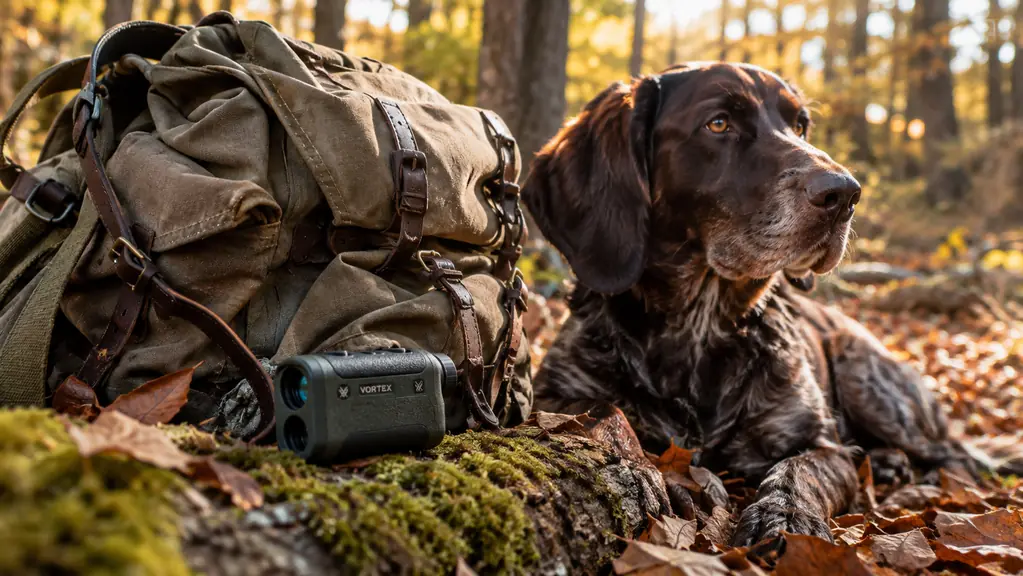
My friend's high-end rangefinder, a Vortex, has better glass and reads faster in low light. It also costs several times more. For a hunter who lives on the edge of legal shooting light and wants the absolute best image, that difference matters. For me, it didn't justify the jump.
I have also used Bushnell units over the years, and they are proven. The TIDEWE undercuts them on price and gives up very little in real-world hunting performance. If I were buying again today, knowing what I know now, I would make the same choice.
What I Liked
- Rechargeable battery went weeks, not days, between charges
- Reads fast and agrees with measured distances out to 300 yards
- Bright, easy-to-read display in low light
- Survived a full season of drops, rain, and a dog in the truck
- A lot of capability for the money
Where It Falls Short
- Struggles in fog and heavy drizzle
- Basic case with no belt loop or strap attachment
- Less reliable past about 500 yards
- Focus ring stiff when new
Two charges got me through three months of hunting, and it still ranged every deer I pointed it at. That is the whole review in one sentence.
Who This Is For
Buy the TIDEWE if you are a deer hunter who wants a trustworthy number at the distances most of us actually shoot, without spending a week's pay. It is also a good fit for someone who is tired of buying button batteries, and for hunters who treat gear like I do, meaning it gets dropped, rained on, and ridden around in a truck with a wet dog.
If you hunt mostly open country where shots stretch past 400 yards, it will still do the job, just with more patience at the far end. For the typical Minnesota whitetail setup, it is more than enough.
It is also a good gift for a younger hunter just getting started, the kind who needs a dependable rangefinder but is still building out a gear bag. They will not outgrow it quickly, and they will not have to spend a fortune to get a real one.
Who Should Skip It
Skip it if you are a long-range target shooter who needs consistent reads on small targets at 1,000 yards. This is a hunting tool, not a precision instrument. And if you shoot mostly in the last few minutes of legal light, when the best glass in the world earns its keep, the TIDEWE will leave you wanting more.
Also skip it if you simply don't want another thing to charge. Even though the battery lasts for weeks, it is still a device that needs a cable occasionally. If a CR2 battery is more your speed, plenty of proven options exist.
And if you are the kind of person who loses charging cables the way I lose pocketknives, keep the cable somewhere permanent. The battery lasts so long that it is easy to forget where you put the cable, and then you will be hunting for it when you finally do need it.
A full season of use and it still holds a charge
That is the short version of my review. If it sounds like the rangefinder you have been looking for, check today's price on Amazon.
Amazon Check Today's Price on Amazon →