
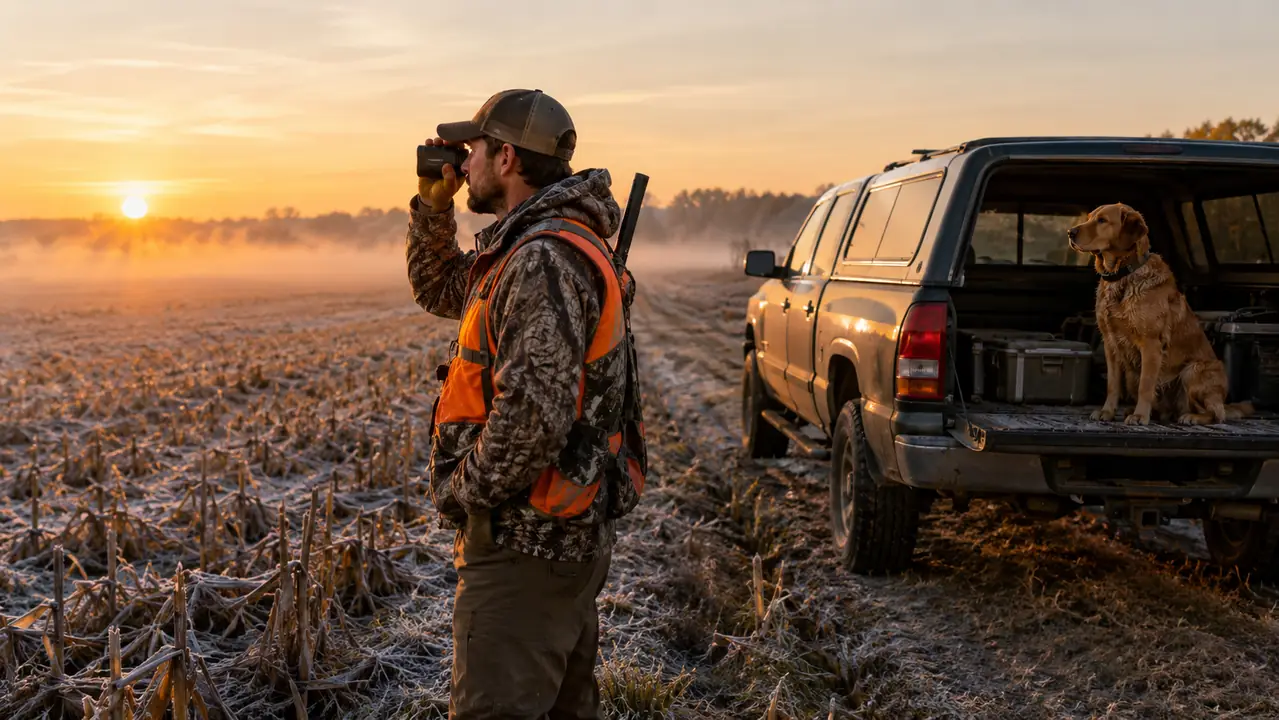
I'll be honest with you up front: I did not expect to like the TIDEWE rangefinder as much as I do. I've been hunting whitetail around Brainerd, Minnesota for thirty years, and I've burned through more budget optics than I care to count. Most of them end up in a drawer by the second season. So when I ordered the TIDEWE, a rechargeable camo rangefinder that costs a fraction of the big-name units, I figured I'd use it for a season, write my notes, and move on. That was eighteen months ago. It's still in my pack, it's still on the same charging routine, and I've ranged more deer with it than with any other rangefinder I own. Here's what I like about it, and here's what nobody tells you before you buy one.
A few quick facts about me so you know where this review comes from. I'm Wade Harlan, a retired lineman, and I hunt whitetail and grouse out of Brainerd, Minnesota. Tucker, my six-year-old yellow Lab, rides in the truck on every trip, which means anything I carry has to survive a wet dog, a muddy topper, and a gravel road. I also fish walleye and bass on the local lakes all summer, and I camp a few weekends every summer. The rangefinder in this review has been in the field with me through two deer seasons, a spring turkey season, and more scouting walks than I can count. That's the testing ground.
The Quick Verdict
The TIDEWE gives you ninety percent of what a premium rangefinder does at a fraction of the price, as long as you don't need long-range extras. It reads deer fast, holds a charge for weeks, and has earned a permanent spot in my pack. If that's what you're after, this is the one to beat.
Amazon Check Today's Price →A rangefinder that actually earns its spot in your pack
The TIDEWE reads fast, holds a charge for weeks, and costs a fraction of the big-name units. Check today's price on Amazon and see if it fits your hunting budget.
Amazon Check Today's Price on Amazon →How I've Used It
I'll be straight about my testing method. I did not set up a tripod in a hay field and shoot at a plywood target at exactly four hundred yards while a GPS verified every reading. I used it the way most of us actually use a rangefinder. I carried it in my vest pocket on scouting walks, I hung it around my neck on opening morning, and I ranged deer, fence posts, treelines, and the far bank of the river when I was fishing. The rangefinder that works in the real world is the one that gets used, and this one got used a lot.
The most honest test came in November, on a cold morning when a doe stepped out at the far edge of a picked cornfield. I had the TIDEWE up, got a reading in about a second, and it read 247 yards. I checked that reading against the distance I'd walked off the week before, and it was within a couple of yards. That's the kind of accuracy that matters when you're deciding whether to take a shot or let a deer walk. I'd rather have a rangefinder that's dead on at two hundred and fifty yards than one that's perfect at a thousand.
I've also used it for bowhunting, which is a different job. Ranging a tree at thirty yards, ranging a decoy at twenty, checking the distance to a trail crossing. For that work, the TIDEWE is more than enough. It reads close targets fast, which is actually the harder test for a budget rangefinder. A lot of cheap units hunt around on close objects before they settle. This one locks in and gives you the same number twice, and consistency is the thing I trust most.
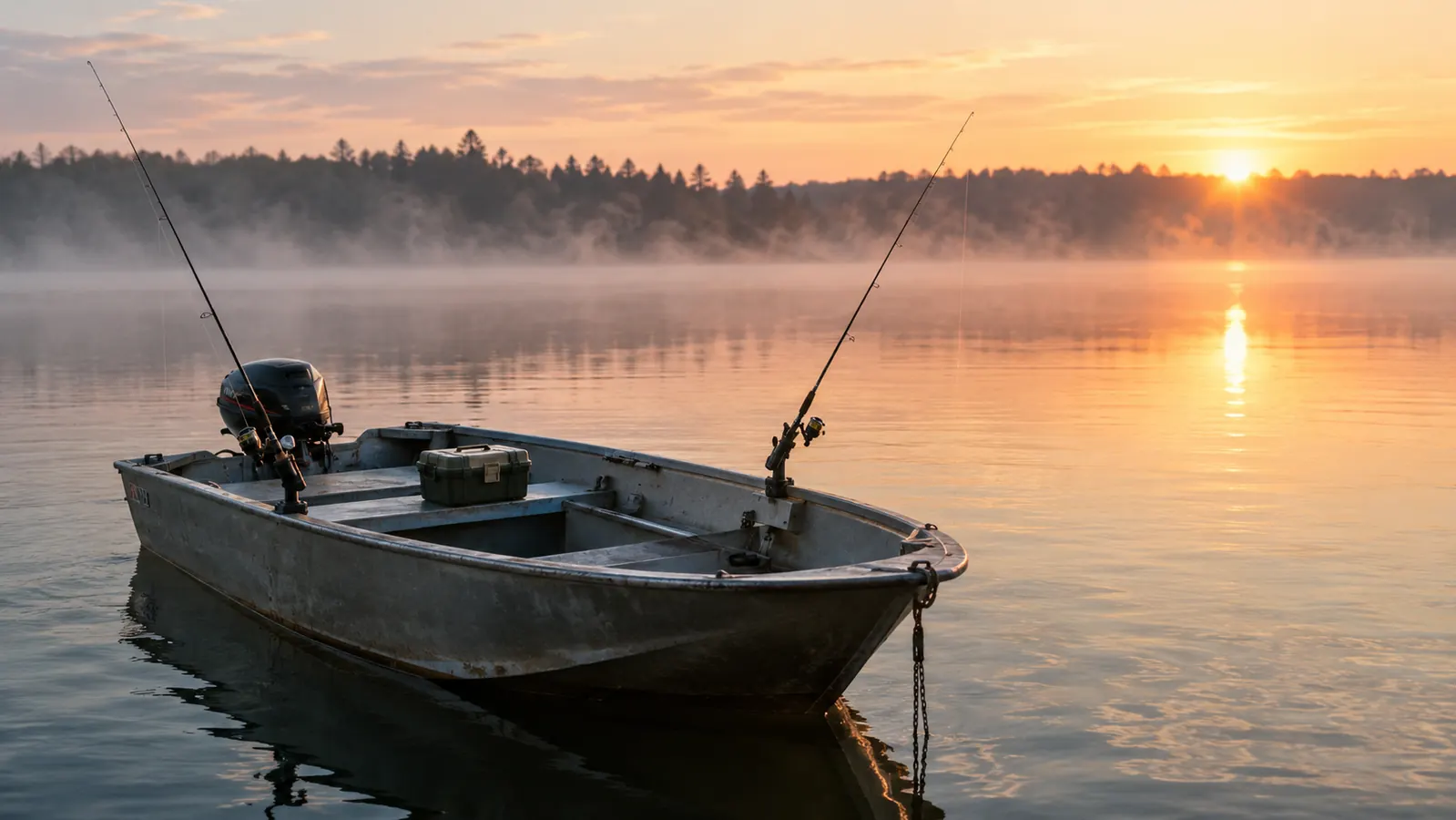
In the summer, the rangefinder goes in the boat with me. I use it to range the far weed line, to check the distance to a point where I want to cast, and to settle the question of how far across the lake that island really is. It sounds like a small thing, but a rangefinder is just as useful on the water as it is in the woods. It reads over open water faster than anything I've used, which makes sense, because there's nothing in the way to confuse the laser.
What I Like About the TIDEWE
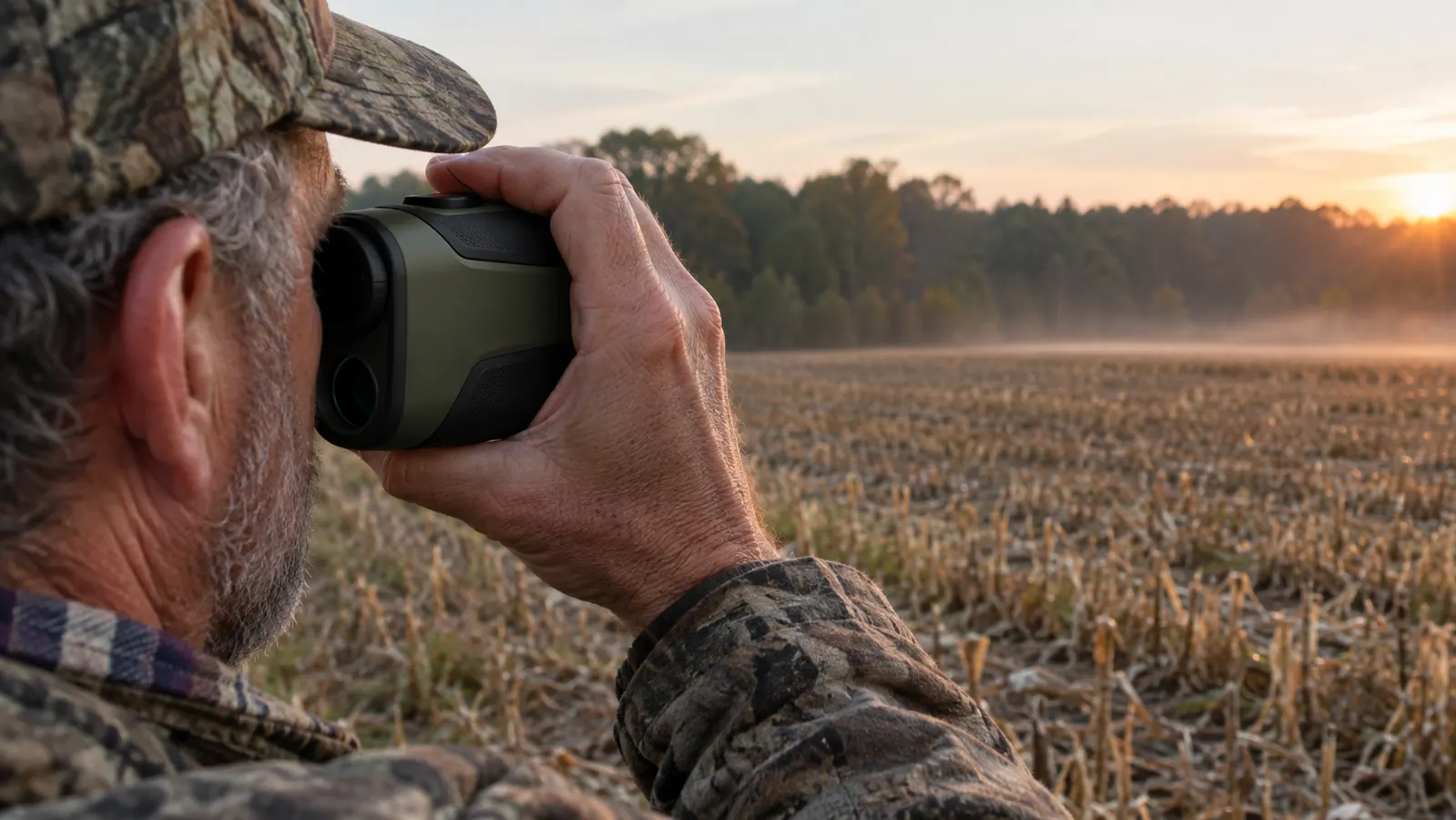
The rechargeable battery is the feature I was most skeptical about, and it's the one that won me over. I expected to be charging this thing every other hunt. In practice, I've gone weeks between charges. I charge it once before deer season, once before turkey season, and it has never died on me in the field. I keep the charging cable in the glove box of the pickup, and that's been enough. Here's what nobody tells you about rechargeable gear: it only becomes a problem if you forget to charge it, and this unit holds a charge long enough that forgetting is hard to do.
The glass is genuinely good for the money. On a bright day, I can read a deer at the far end of a picked field without any trouble. The display is clear and bright enough to see in daylight, and the reticle doesn't clutter the view. What matters most to me is speed. A rangefinder that takes three seconds to give you a number is useless on a deer that's already walking. The TIDEWE gives you a reading fast, and it gives you the same reading twice, which is the real test of consistency. I've owned rangefinders that cost three times as much that couldn't do that.
It's also the right size. It fits in a vest pocket without feeling like a brick, and it's light enough that I forget it's on the lanyard. I've carried it on grouse hunts where I never needed it, and I didn't mind. That matters more than you'd think, because the rangefinder you leave at home because it's bulky is the one you won't have when a buck steps out. It also handles the weather well. I've had it out in rain, in snow, and in single-digit cold, and it has never fogged up or quit on me.
Where It Falls Short
Now the part that doesn't make it into the product description. The buttons are small, and they're stiff when you're wearing winter gloves. On a cold November morning, I have to take my glove off to hit the power button reliably. That's a small thing, but it matters when it's ten degrees out and your hands are already cold. I've learned to pre-position the rangefinder with the button facing up before I tuck it in my pocket, so I can find it by feel. It's a workaround, not a fix.
The eyecup is another place where the budget shows. If you wear glasses, the eyecup doesn't adjust enough to get a clean seal, and you'll see a little stray light around the edge. It doesn't ruin the reading, but it's not as tidy as a unit with a proper twist-up eyecup. I don't wear glasses for distance, so it's a minor thing for me. But if you wear glasses full time, I'd try to handle one before you buy, or order from a place with a good return policy.
In very low light, right at dawn and dusk, the display gets harder to read. It's fine in the middle of the day, and it's fine in full dark if you have the backlight on, but that gray zone between first light and full sunrise is where I notice it. The other tradeoff is the battery. Rechargeable is great until it isn't. If you run it dead on a weeklong hunt with no way to charge it, you're out of luck until you find a wall outlet. I've never had that happen, but I also make a habit of topping it off before I leave the house.
What I Liked
- Fast, consistent readings on deer out to normal field distances
- Rechargeable battery that genuinely lasts weeks between charges
- Compact and light enough to forget you're carrying it
- Clear glass and a simple display for the price
- Holds up to rain, cold, and a life in a truck with a wet dog
Where It Falls Short
- Buttons are small and stiff with winter gloves on
- Eyecup doesn't adjust enough for eyeglass wearers
- Display washes out in very low light at dawn and dusk
- No spare battery option, so you depend on a charge before you leave
The real test of a rangefinder isn't the spec sheet. It's whether the number it gives you is the same number it gave you the last time you looked.
The Features That Matter Most on a Real Hunt
If you're shopping for a rangefinder, here's what I'd tell you to look past and what actually matters. Nobody needs a rangefinder that reaches twelve hundred yards to hunt whitetail in Minnesota. The distances that matter are twenty to three hundred yards. That's where this TIDEWE lives, and it's very good there. The 700 or 1000 yard rating on the box is nice for open country out west, but for the woods and fields I hunt, I rarely need more than three hundred. Buy for the distances you actually shoot, not the ones on the box.
Scan mode is worth mentioning, because it's the feature I use more than I expected. You hold the button and sweep across a field, and the distance updates as you go. It's how I range a whole treeline in a few seconds instead of picking one tree at a time. The TIDEWE does this well, without the jumping around that cheap units sometimes do. It reads steadily across open ground, and it settles fast on whatever you're pointing at.
The other thing that matters is how it behaves when it's cold. I've had rangefinders that fogged on the inside after an hour in a tree stand. I've had others that got sluggish in freezing temperatures. The TIDEWE has been out with me in single digits, and it has never fogged or slowed down. That's the kind of durability that doesn't show up in the product photos. It's the reason this one is still in my pack and the others are in a drawer.
Alternatives I Considered
I compared the TIDEWE against the two things most people actually consider: a used premium rangefinder, and a cheaper no-name unit from a brand you've never heard of. I've owned both, so I have an opinion. The used premium unit is tempting, and if you can find one at a good price from a seller you trust, it's a legitimate option. But you're buying someone else's wear and tear, and you don't get a warranty. The TIDEWE comes with a warranty and a brand that answers the phone. For the same money, that's worth a lot.
The no-name units are where most of the disappointment lives. They're cheap, they look fine in the box, and then they're dead in a drawer by October because the battery won't hold a charge or the display quit. TIDEWE is a budget brand, but it's an established one. They make a lot of hunting gear, they've been around for years, and their customer service actually responds. That's the difference between a cheap rangefinder and a budget rangefinder that's worth buying. One saves you money once. The other saves you money every season.
The biggest alternative I keep coming back to is not carrying a rangefinder at all. Plenty of hunters I know use a map, a GPS, or their feet. And honestly, for the first twenty years I hunted, I did the same. But a rangefinder changes how you hunt. It tells you whether that deer is in range before you commit to a shot, and it makes you a better judge of distance every time you use it. Once you get used to knowing the exact yardage, it's hard to go back. For the money, this TIDEWE is the cheapest way to find out whether that's a tool you want in your pack.
The Bottom Line
Here's my honest bottom line after eighteen months with the TIDEWE. It is not the finest rangefinder money can buy, and I'm not going to pretend it is. It is, though, a rangefinder that reads deer fast, holds a charge for weeks, fits in a pocket, and has never let me down when it mattered. For the hunter who wants a dependable tool without spending premium money, that's the whole ballgame. I'd buy it again, and I don't say that about most gear in my pack.
I know there are fancier rangefinders on the market, and if you have the money and the need, you should buy one of those. But most hunters I know don't need a rangefinder that talks to their phone or compensates for a thirty-degree slope on a mountain. They need to know if that deer is 180 yards or 260 yards. This one answers that question every single time.
Who This Is For
Buy the TIDEWE if you want a rangefinder that does the basics really well and doesn't cost a fortune. It's for the hunter who ranges deer at fifty to three hundred yards, checks a treeline before setting up, and wants a battery that lasts the season. It's for the bowhunter who needs quick, honest numbers at close range. It's for the person who keeps gear in a pickup with a wet dog in the back and wants something that won't be a tragedy if it takes a knock. If that sounds like you, this rangefinder will probably surprise you the same way it surprised me.
Who Should Skip It
Skip it if you need a rangefinder for long-range shooting or wide-open western country, where the distances get past six hundred yards and you need angle compensation and a ballistic solution. Those jobs call for a unit that costs several times more, and the TIDEWE isn't trying to be that. Also skip it if you wear glasses and a clean eyecup seal is a dealbreaker, or if you simply prefer a unit that takes a standard battery you can buy at any gas station. None of that makes this a bad rangefinder. It just means it's not the rangefinder for you, and it's better to know that before you buy than after.
The rangefinder that earns its place in your pack
If you want fast, honest readings without spending premium money, the TIDEWE is worth a hard look. Check today's price on Amazon and decide for yourself.
Amazon Check Today's Price on Amazon →