
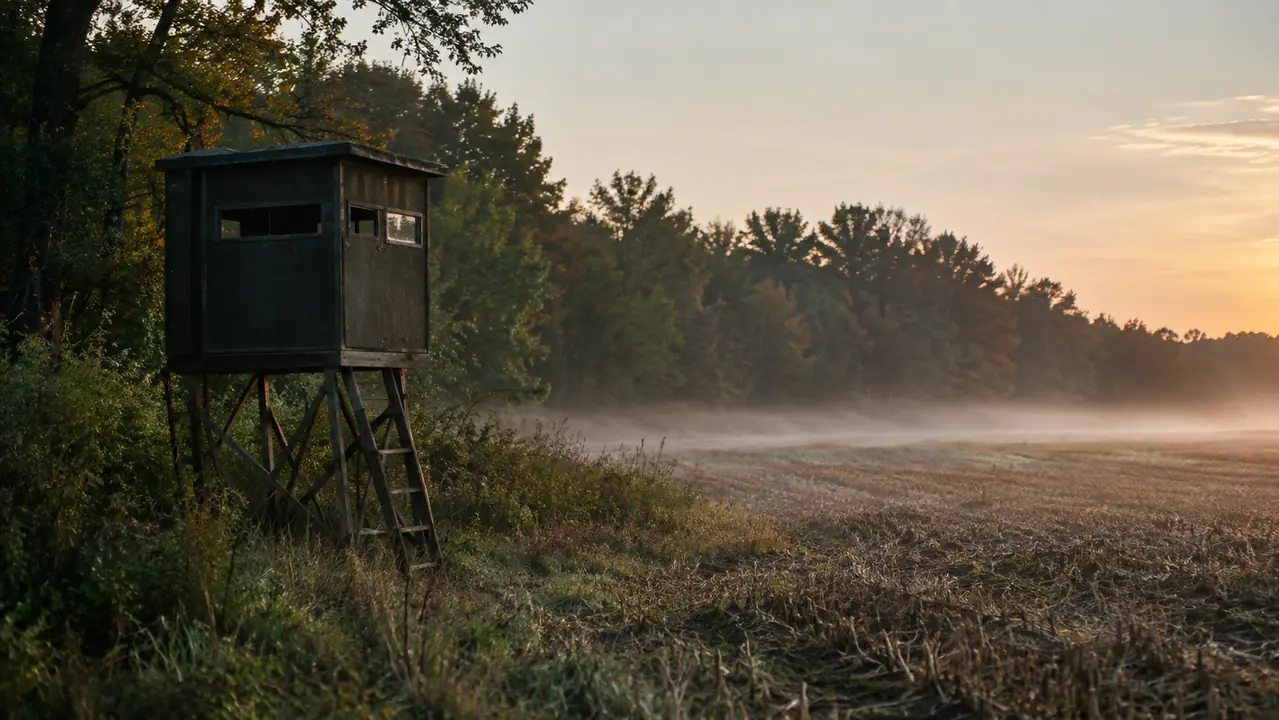
Every fall I tell myself the same thing: this year I'm going to quit freezing in a treestand and start hunting the ground. And every year I talk myself out of it, because a ground blind that actually works costs real money, and the cheap ones fall apart by Thanksgiving. I know, because I've owned the cheap ones. So when I finally bought the Ameristep Caretaker in September of 2023, I did what I always do with new gear: I set it up in the yard before I ever took it to the woods, and I ran it through a full season before I trusted it. This is what two seasons of whitetail sits, a few grouse hunts, and one very wet Minnesota fall taught me about this blind, the good and the bad.
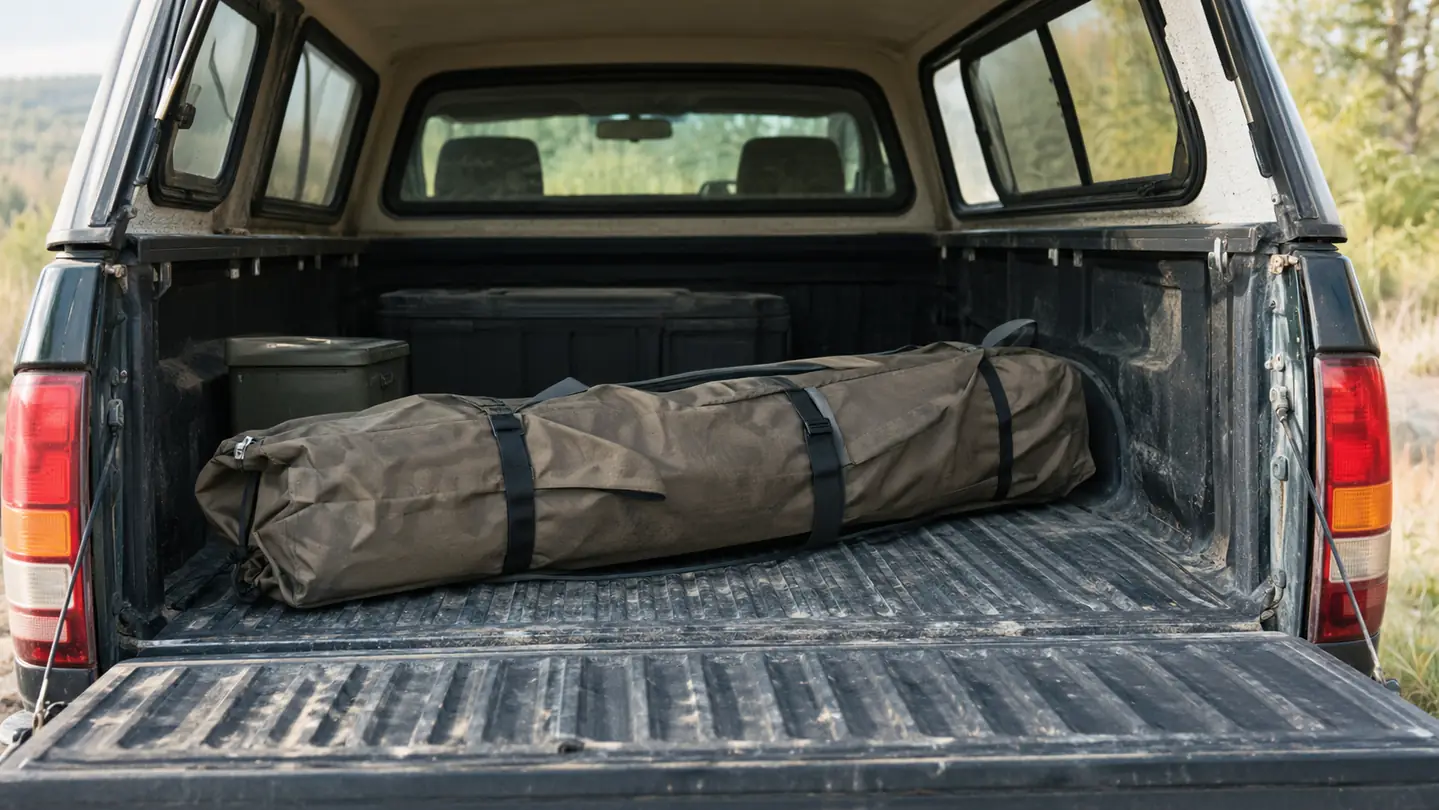
I'm not a gear reviewer, and I'm not trying to be one. I'm a retired lineman, fifty-eight years old, and I live outside Brainerd, Minnesota. I hunt whitetail and grouse in the fall, fish walleye and bass on the local lakes in the spring and summer, and I buy my own equipment with my own money. When something works, I keep using it. When it doesn't, it goes in the barn and I try something else. The Caretaker is still in the back of my pickup topper right now, packed in its bag with two sets of stakes and a roll of paracord, and that tells you something. But it has also taught me more about ground blind quirks than any piece of gear I've owned in thirty years of deer hunting, and a few of those quirks are things nobody puts in the product description.
The Quick Verdict
The Ameristep Caretaker is the best value ground blind I've owned: it sets up in two minutes, it's roomy enough to draw a bow inside, and it has held up through two full seasons. It also has real flaws, the zippers, the condensation, the cheap stakes, and you should know about all of them before you buy.
Amazon Check Today's Price →The ground blind I'd compare everything else against
I've run the Ameristep Caretaker for two full seasons of hard use. If you're shopping for a ground blind, this is the one I'd start with. See today's price and current owner reviews on Amazon.
Amazon Check Today's Price on Amazon →How I've Used It
The Caretaker has been set up more times than I can count over the past two seasons. Most of those were whitetail hunts: a dozen or more sits from mid-October through the end of December, some at first light, some all-day sits when the rut slowed down and the deer moved at noon. I used it on public land and on a couple of private parcels, in standing corn, along a picked bean field, and once in a patch of tag alders that I had no business dragging a blind into. It also went on three grouse hunts, where it mostly served as a place to get out of the wind while Tucker, my six-year-old yellow Lab, curled up on the floor and went to sleep.
Every setup followed the same routine. I carried the blind in on my back, or dragged it on a rope when I was going a quarter mile or more. I set it up in the dark more than once, which is its own skill. I staked it down every single time, even when the ground was frozen solid, because a Minnesota wind will turn an unstaked blind into a kite in about four seconds. And every time I packed it up, I put it back in the bag, which sounds obvious but is the single thing that keeps a fabric blind alive. I mention the bag because it's one of the things I have opinions about, and I'll get to it in a minute.
I also did the things you're supposed to do but almost nobody does. I brushed the blind in with whatever was growing around it. I cut shooting lanes before daylight, not after. And I practiced drawing my bow inside it at home, in the yard, which is how I learned that the Caretaker is one of the few blinds where I can get a full draw without hitting the ceiling or a hub joint. That one detail matters more than the camo pattern, and it's the main reason I kept this blind instead of sending it back.
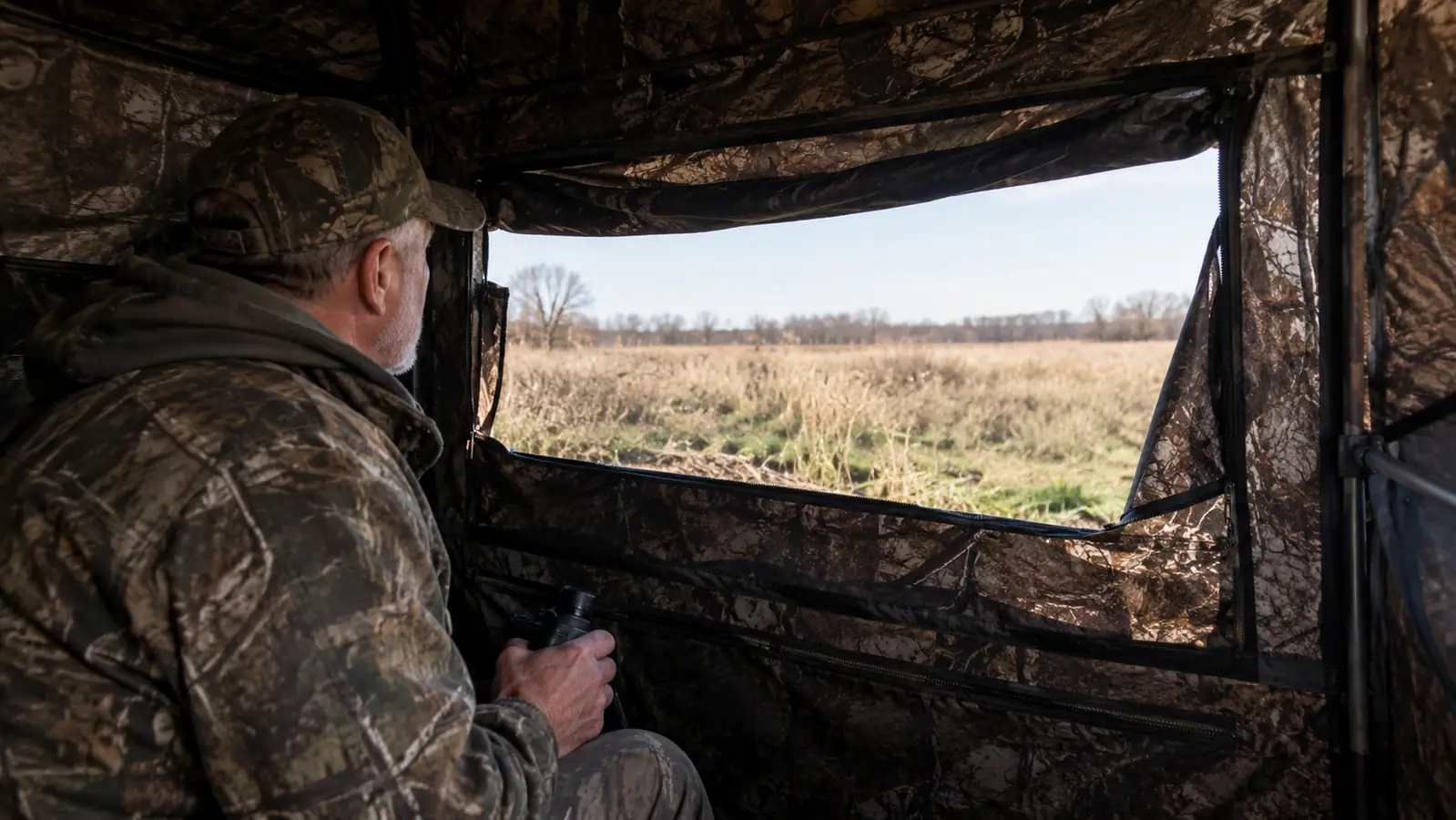
What the Ameristep Caretaker Gets Right
Let's start with setup, because that's where a ground blind earns or loses its place in the truck. The Caretaker is a hub-style blind, which means the frame is a set of poles that snap into hubs when you pull the blind out of the bag. The first time I set it up, on a flat patch of lawn in September, it took me maybe two minutes, and most of that was figuring out which way the door faced. By the fourth or fifth time, I could do it in the dark without a headlamp, which sounds like a small thing until you've tried to assemble a pole-and-sleeve blind at a quarter to six in the morning with frozen fingers.
It's also roomy. I'm six feet tall, and I hunt with a pack, a rifle or a bow, and sometimes a thermos the size of my forearm. In the Caretaker I can stretch my legs out, lean back against the wall, and still reach a window without contorting my body. Tucker has ridden inside it with me a few times on bird hunts, and at seventy-five pounds he fits on the floor without crowding my shooting shoulder. For a blind in this class, that interior space is the difference between a comfortable four-hour sit and a miserable one that ends with you walking back to the truck at nine in the morning.
The windows are the other thing I've come to appreciate. There are windows on all four sides, which means I can set up in a corner of a field and cover two directions, or sit with my back to a treeline and watch the open ground. The shoot-through mesh works. I've taken shots through it with both a rifle and a bow, and it doesn't distort the view the way some meshes do. When I want to shoot out a fully open window, the mesh is sewn to the flap, so it stays out of the way instead of drooping into the opening. Those little design details are why this blind has survived two seasons without me wanting to throw it in the lake.
Where It Falls Short
Now the part the product photos don't show you. The zippers are the weak link, and I'll say it plainly because most reviews dance around it. After about eight sits, the zipper on the main window started catching. By the end of the first season it would stick about a third of the way down, and I'd have to work it back and forth to get it closed. It has never failed me in the field, and it still closes fine when I take my time, but it's a constant small annoyance. Dirt and sand are what kill zippers, and on a ground blind there's no avoiding dirt. I'd rather Ameristep put a heavier zipper on it, and I suspect most people who have owned one for a season would say the same.
The second thing nobody tells you is condensation. On a cold, humid morning, with one person breathing inside a sealed blind, the inside of the fabric gets wet. Not dripping wet, but wet enough that your sleeves pick up moisture when you brush against the wall, and wet enough that the mesh can frost over on the inside during a hard freeze. I've learned to crack a window on the side away from the wind, which fixes most of it, but it's something you will deal with every single cold sit. If you're the kind of hunter who pictures a fully sealed, toasty blind, this one will teach you otherwise.
The stakes that come with it are usable but not great. They're the standard thin metal pins, and they bend on rocky ground and on frozen ground. I replaced mine with a set of heavier stakes from the hardware store after the second one bent, and I added a couple of extra tie-downs for the top corners. That's maybe an hour of work one evening, and it turned a blind that was merely okay in the wind into one I trust in a real blow. I bring this up because the reviews are full of people complaining about the stakes, and they're right to complain, but it's also the easiest fix in the world, and it shouldn't be the reason you skip an otherwise good blind.
The last thing is the carry bag. It works, and the blind fits in it, but it's a tight fit, and the zipper on the bag is the same light-duty zipper as the windows. I pack the blind carefully, folding it the way it wants to fold, and I never force it. If you're someone who shoves gear into a bag and jumps on it to get it closed, you will split this bag by December. Take the extra ten seconds to pack it right and the bag will last as long as the blind.
What I Liked
- Sets up in about two minutes, even in the dark
- Roomy interior fits a tall hunter with a pack, or a hunter plus a dog
- Windows on all four sides with clear shoot-through mesh
- Camo pattern blends in well once you brush the blind into cover
- Holds up in wind once you upgrade the stakes and add tie-downs
- Packs down small enough for a pickup topper or an ATV rack
Where It Falls Short
- Window zippers catch and stick after a few weeks of field use
- Condensation builds up on cold, humid mornings
- Included stakes bend on rocky or frozen ground
- Carry bag is a tight fit with a light-duty zipper
- Not a fully sealed blind, water can pool on the roof if you don't pitch it tight
Two seasons, more than a dozen sits, and the Ameristep Caretaker has never once cost me a hunt. The zippers stick and the stakes bend, but the blind itself has never let me down.
What Nobody Tells You About Ground Blinds
Here's the thing nobody tells you about any ground blind, including this one: the camo pattern is only half the job. The Caretaker's fabric does a good job of breaking up the outline of a human shape, and Ameristep knows how to print a pattern that works in the woods. But a blind set in the middle of a mowed field looks like a box no matter what pattern is on it. The hunters who kill deer from ground blinds are the ones who brush the blind in, who set it against a treeline or a fencerow, and who set it up weeks before the season so the deer get used to seeing it. The blind does its part. You have to do yours.
Another thing: the shoot-through mesh is great for a rifle and good for a bow, but it costs you light. At first light and last light, when the deer actually move, the mesh dims the view just enough that you have to be more careful about what you're looking at. That's not a flaw in this blind specifically, it's a flaw in all shoot-through mesh, but it's the kind of thing you only learn by sitting in one. My habit now is to unzip the window on the side I expect deer to come from about fifteen minutes before shooting light, and to use the mesh only when I have to.
And here's the one that surprised me most: a ground blind is warm. On an early October afternoon, with the sun on the fabric and no wind, the inside of the Caretaker gets genuinely hot. I've sat in it in a t-shirt in October more than once, and I've also been glad for that trapped heat in late November when the temperature never got above ten. It's a feature in November and a bug in September, so plan your early season sits accordingly. Dress light for the walk in and carry the heavy layer in your pack.
Alternatives I Considered
Before I settled on the Caretaker, I looked at the usual suspects. A buddy of mine hunts out of a heavier, more expensive blind that sets up even faster and has beefier zippers, and I won't pretend it isn't nicer. But it costs a good deal more, it weighs more, and it takes up more room in the truck, and for the kind of hunting I do, where the blind goes in and out of the topper every weekend, the Caretaker's lighter weight and smaller pack size win. The bargain blind from the big box store was never really in the running. I've seen two of those come apart at the hubs, and one of them was mine, years ago, on its second sit, on a day when the wind was blowing hard enough that I should have stayed home.
I also thought hard about just sticking with treestands, which is what I'd hunted from for twenty years. But my knees are sixty years old, and a ground blind lets me hunt places a treestand can't go: a corner of a picked cornfield, a strip of brush along a creek, a ditch line that funnels deer past a pinch point. The Caretaker turned out to be the compromise that made sense. It's light enough to carry on my back, simple enough that I don't fight it in the dark, and good enough that after two seasons I haven't felt the need to replace it.
Who This Is For
The Ameristep Caretaker is for the hunter who wants a real ground blind without spending what a guided hunt costs. It's for the hunter who uses public land and needs something they can carry in on their back and set up in the dark. It's for the bowhunter who needs enough headroom to draw, and for the rifle hunter who wants to stay dry and out of the wind during an all-day sit. It's for the hunter who understands that a blind is a piece of gear you maintain, not a tent you abuse and replace every year. If you're willing to upgrade the stakes, learn the zippers, and brush the blind into cover like you're supposed to, this blind will give you two, three, or four seasons of honest service. That's what I've gotten out of mine so far, and it's still in the truck.
Who Should Skip It
Skip the Caretaker if you want a blind you never have to think about. The zippers need patience, the condensation needs managing, and the included stakes are really just placeholders for something better. If you hunt once or twice a year and want everything to work flawlessly out of the box, spend the extra money on a heavier blind with better hardware. And if you're a run-and-gun hunter who sets up in a new spot every morning and never brushes anything in, a ground blind probably isn't your answer no matter which one you buy. The Caretaker is a tool, not a magic box. Used the way it's meant to be used, it's a very good one, and that's the honest truth.
Still the blind I'd buy again tomorrow
After two seasons and more sits than I can count, the Ameristep Caretaker is still in my truck and still doing its job. If you want a ground blind that sets up fast, holds up, and doesn't cost a fortune, check today's price and current owner reviews on Amazon.
Amazon Check Today's Price on Amazon →