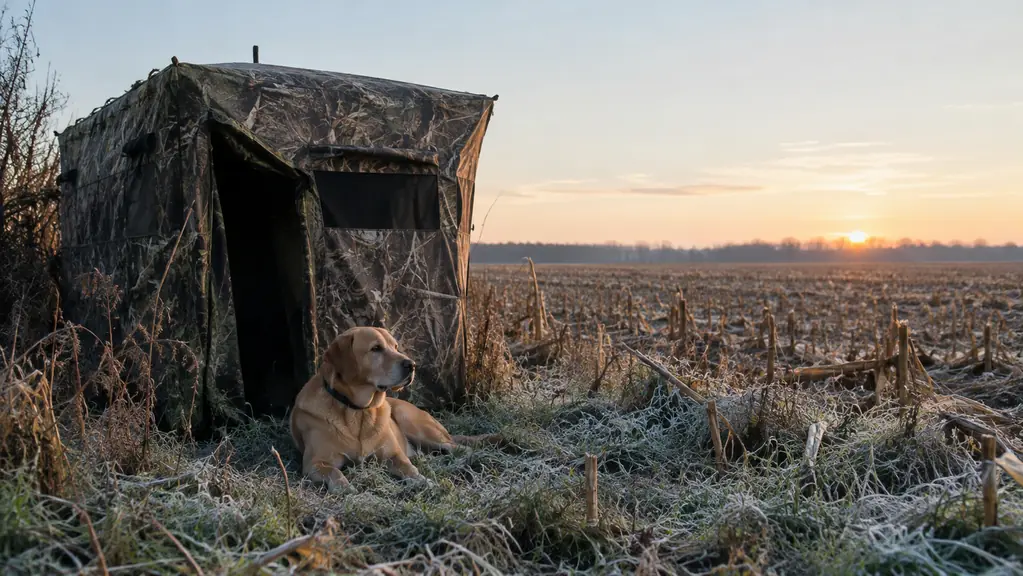
For thirty years I hunted whitetails out of a tree stand, and I still do on certain mornings. But the older I get, the more often I reach for the Ameristep Caretaker ground blind that rides in the back of my pickup. The short answer to the question in the title: a tree stand gets you above a deer's eyes, and a ground blind gets you into places a tree stand can't go. For most of my hunting now, the Caretaker is the better tool.
I'm Wade Harlan. I retired from the lineman trade a few years back and I hunt the fields, ridges, and river bottoms around Brainerd, Minnesota. Tucker, my six-year-old yellow Lab, rides along on grouse hunts, and the 16-foot aluminum boat gets us onto the walleye lakes by spring. Deer season is the one I plan around, and this is the comparison I wish somebody had handed me a decade ago: what a ground blind actually does for you, what it gives up, and who should buy which. I'm not here to sell you on one tool over another. I'm here to tell you what a season of using both has taught me.
| Ameristep Caretaker | Tree Stand | |
|---|---|---|
| Setup | Unzip the bag, let it pop open, stake it down. Five minutes, even in the dark. | Find the right tree, climb, hang or strap the stand, tie off. Thirty minutes on a good day. |
| Height | Ground level. You're in their world, so movement discipline matters more. | Fifteen to twenty feet up, above the deer's line of sight and most of their attention. |
| Weather | Four walls and a roof. Wind, rain, and snow stay outside. | A platform in the open. You dress for the weather because it finds you. |
| Scent control | Your scent pools at ground level and drifts out the windows. | Your scent rises and passes over deer that are downwind. |
| Safety | No climbing, no fall zone. Hunt alone without worrying. | Falls from height are the most serious accidents in hunting. |
| Field of view | Windows on all four sides, but you watch through openings. | A full view from above, over brush and briars that hide a deer at eye level. |
| Where it works | Fields, food plots, clearings, ditch banks. Any flat ground. | Only where there's a suitable tree, and some of the best ground has none. |
| Long sit comfort | Room for a camp chair, a thermos, a pack, even a dog on a cold morning. | A small platform. You stand, you lean, you count the minutes. |
| Best for | Food plots, field edges, turkeys, grouse, and long sits in bad weather. | Ridges, draws, and bowhunting from above. |
How I've Used the Ameristep Caretaker
I've owned the Caretaker for about a year and a half, and it has logged somewhere around forty or fifty sits, most of them on food plot edges and picked cornfields. It sets up fast enough that I don't dread it at five in the morning, and it folds down flat enough to ride in the truck topper with Tucker and a cooler without a fight. I've used it in a cold October drizzle, in a November wind that would have ended a tree stand sit by nine, and on one snowy morning when I was glad for a roof over my head.
The fabric has held up to brush, briars, and a wet dog crowding in out of the rain. The windows open quiet, which matters more than most people think, and the zippers have survived a full season of use. It is not a palace. It is a tool, and it does its job. The thing I had to unlearn was the idea that being on the ground meant being at a disadvantage. Done right, it's just a different kind of hunting, and in the right spot it's every bit as effective.
One sit in particular sold me on the whole idea. It was mid-November, the wind was pushing twenty-five, and the deer were working a picked cornfield I'd hunted from a ladder stand for years. I set the Caretaker on the field edge the evening before, brushed it in, and climbed in before first light. I sat until noon in a light vest while the wind rattled the dry stalks outside. I saw seven deer that morning, including a buck I had only ever seen on trail camera. From the tree stand on that same field, I would have been blown out by nine.
Where the Ameristep Caretaker Wins
The Caretaker's biggest advantage has nothing to do with camouflage. It's that it works almost anywhere. A tree stand needs a tree with the right size, the right lean, and a clean approach in the dark. The Caretaker sets up in a picked cornfield, on a food plot edge, along a ditch bank, or in a patch of brush you couldn't get a ladder anywhere near. I have moved it at midday when the wind shifted, something you will never do with a hang-on stand. That flexibility is the whole ballgame for hunters who work small properties and changing winds.
The other advantage shows up around hour three. In a tree stand you stand, you lean, you shift, and you watch the sun crawl. In the Caretaker I sit in a camp chair with a thermos on the ground beside me and a shooting window open in front. Wind and rain stay outside, which means I stay longer, and staying longer is the closest thing to a guarantee this sport offers. At 58, with a lineman's knees, I also don't climb into it. That matters more every single year, and it's the reason the blind gets grabbed first when the forecast turns ugly.
Where a Tree Stand Wins
I'm not going to pretend the ground blind does everything. A tree stand puts you above a deer's line of sight, and that is a real, measurable advantage. A mature buck that has been educated by ground hunters reads a ground blind as something new in his world, and he will circle downwind of it every time. From eighteen feet up, you are not part of the ground-level story. You can watch a deer work through brush and briars that would hide it completely from a window at eye level. In thick country, that elevation is the difference between seeing deer and only hearing them.
The other thing a tree stand gives you is wind. Scent rises. From a stand, your scent drifts over the top of deer that are downwind, where a blind lets it pool at nose level and roll out the windows. On public land, or anywhere deer have seen a lot of hunters, that is often the difference between a deer that walks past and a deer that blows out of the county. If I'm hunting a ridge with good trees and a steady wind, I still climb. The stand earns its place in the truck on those days, and I don't see that changing.
Bowhunters have a separate reason to like the high seat. A downward angle from a tree stand gives you the double-lung window that a ground-level shot simply doesn't offer in most setups. You can make it work from a blind, but it takes a carefully cut window and a lot of practice. If archery is your main game, that alone can tip the scale toward a stand.
Hunt Longer, Sit Warmer, and Cover Ground a Tree Stand Can't
The Ameristep Caretaker sets up in minutes, keeps the weather off you, and gets you into spots a tree stand never could. It has become my go-to for most sits. Check today's price on Amazon.
Amazon Check Today's Price on Amazon →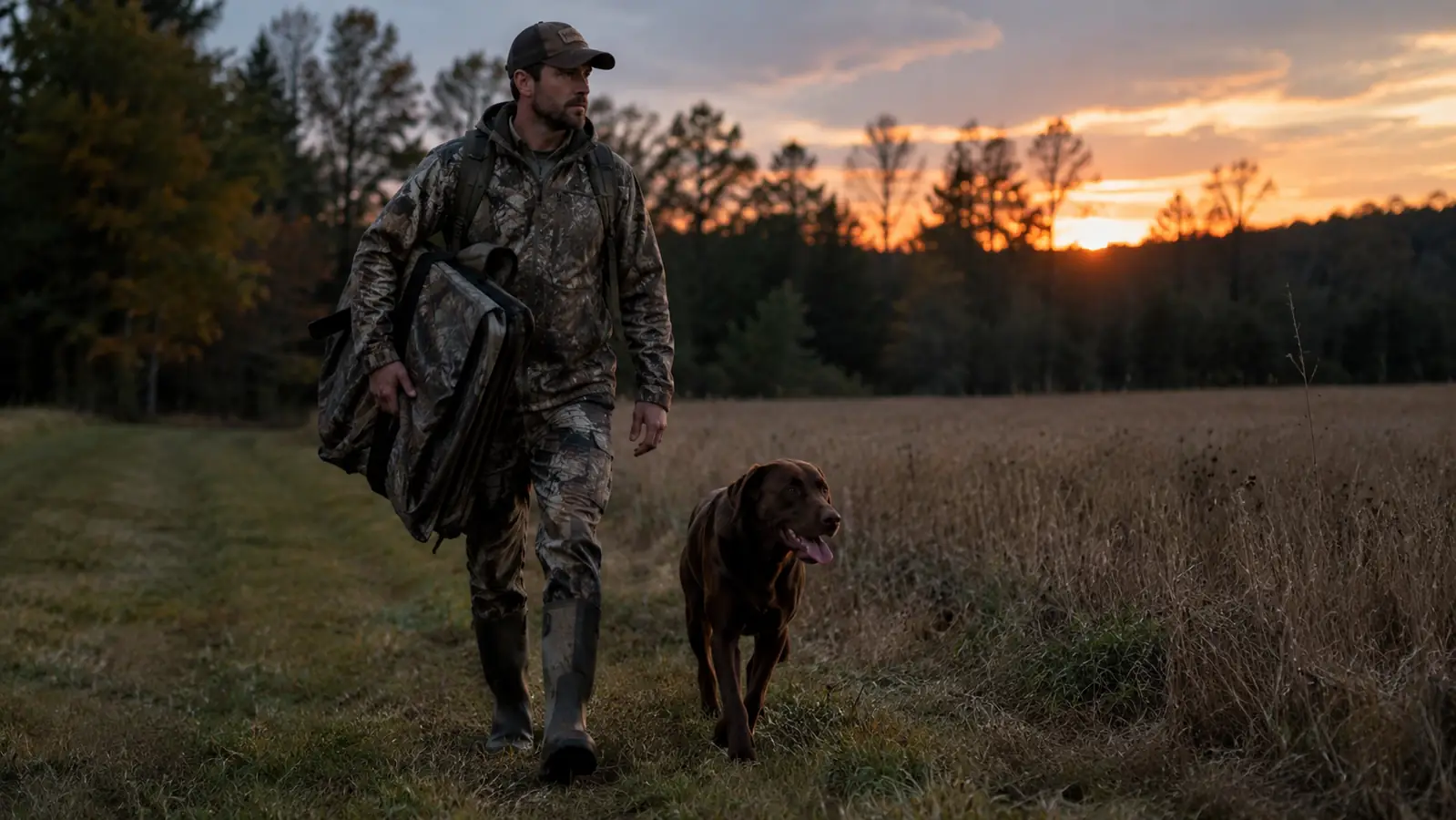
Setting Up a Ground Blind the Right Way
Most of the complaints I hear about ground blinds come from people who set them up wrong. They put them out the morning of the hunt and then wonder why the deer won't come near. The blind needs time to become part of the scenery. I like to set mine a week or two before the season, stake it down tight so it doesn't flap, and brush it in with whatever is growing around it. Cut a few stalks and lean them against the sides. It looks like junk to a deer, and junk is exactly what you want to look like.
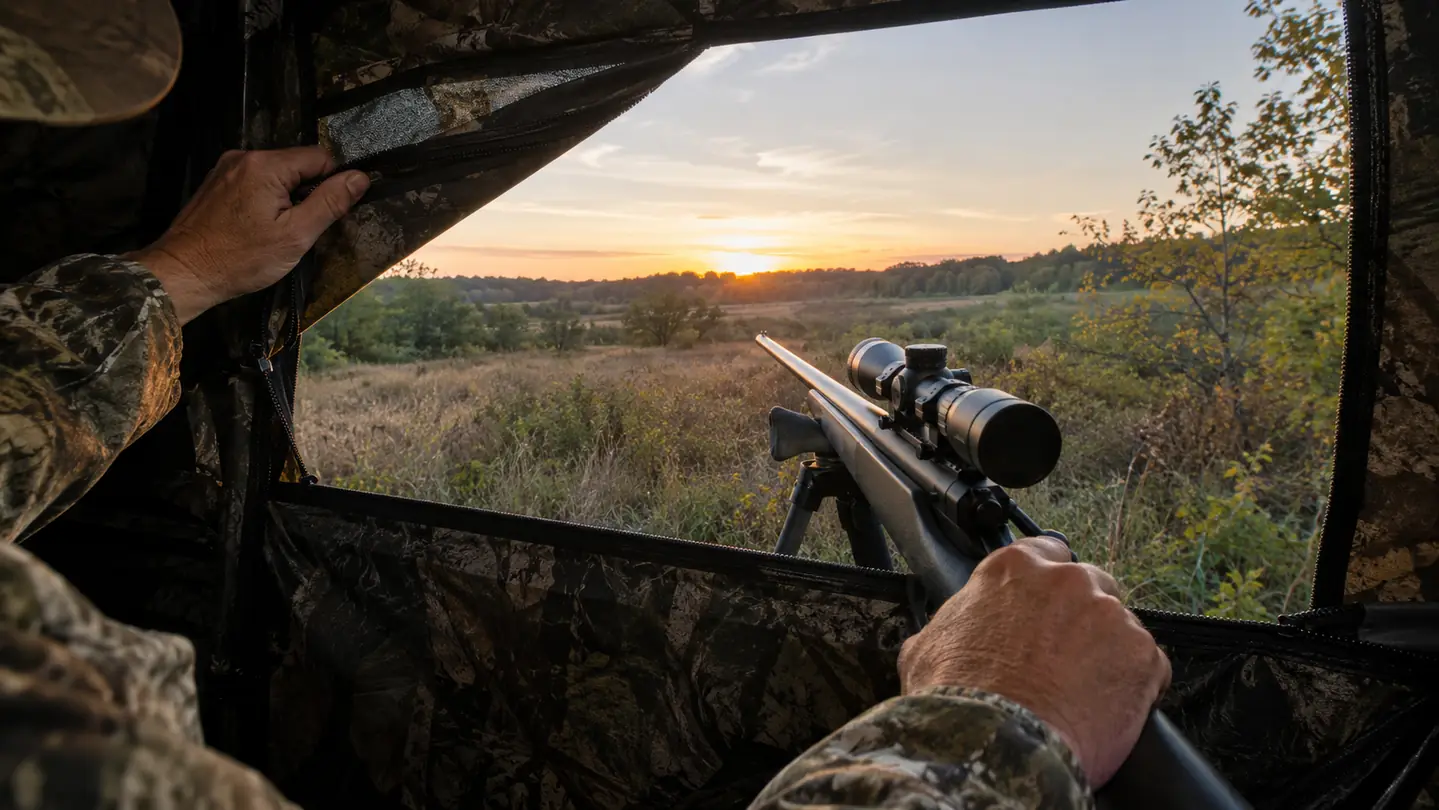
The other mistake is window discipline. Leave the windows closed until you're ready to shoot, and move slow when you open them. Deer notice motion at ground level long before they notice shape. Also give yourself a shooting lane on the side you actually expect deer, and don't be afraid to cut a few low branches to clear the view. A ground blind is a tool you have to learn, same as a stand. Give it that, and it will put deer in front of you that you'd never see from a ladder.
One more setup tip: practice shooting from the blind before opening day. A seated shot out of a low window is different from what you do at the range, and the first time shouldn't be when a buck is standing at thirty yards. I set up a target at the field edge and run through the motion until I can get the rifle up, the window open, and the safety off without thinking. It takes one afternoon and it pays for itself on the first sit.
Who Should Buy Which
Buy the Caretaker if you hunt food plots, field edges, or any open ground. Buy it if you hunt turkeys in the spring or grouse with a dog in the fall, because the same blind covers all of it. Buy it if you're over 50 and the climbing has lost its charm, or if you like to set up fast and keep things simple. Buy a tree stand if you bowhunt and want the downward shot angle, if you hunt pressured public land where deer have patterned ground blinds, or if your best spots sit on ridges with good trees and a steady wind. Most hunters I know eventually own both. If you can only start with one, and you're not a die-hard bowhunter, the Caretaker is the one I'd put in the truck first.
One more thing worth saying. Tucker rides along on bird hunts, and the Caretaker is the blind I take when he's part of the plan, because it gives both of us room and keeps him out of the wind. No tree stand I've ever used was dog-friendly. On the days when he's in the truck, that alone settles the argument.
If you're still on the fence, borrow a friend's blind for a weekend sit before you spend anything. Set it up on a field edge you know, brush it in, and give it one full morning. The first time a deer walks past at twenty yards while you sit there in a t-shirt with your coffee, you'll know which side of this argument you're on.
The Bottom Line
If I had to sum it up in one sentence: the Ameristep Caretaker is the tool I reach for when I want to hunt longer, hunt more places, and hunt without climbing a tree. The tree stand is the tool I reach for when I need elevation on a specific ridge or a clean downward angle for a bow. They are not rivals. They are two tools in the same box, and each one has days when it's clearly the right call.
For the hunter who is just getting started, or the older hunter whose knees have voted against ladders, the Caretaker is the better first purchase. It costs less, it sets up faster, it covers more hunting situations, and it will put you in front of deer on the kind of ground most tree stands can't touch. You can add a tree stand later if the spots you hunt call for it. I did, and now both ride in the topper. But if the topper had room for only one, the blind would win.
Ready to Hunt From the Ground?
The Ameristep Caretaker is the ground blind I reach for first. It sets up fast, holds up to real use, and gets me into spots a tree stand can't. See today's price on Amazon and decide for yourself.
Amazon Check Today's Price on Amazon →