
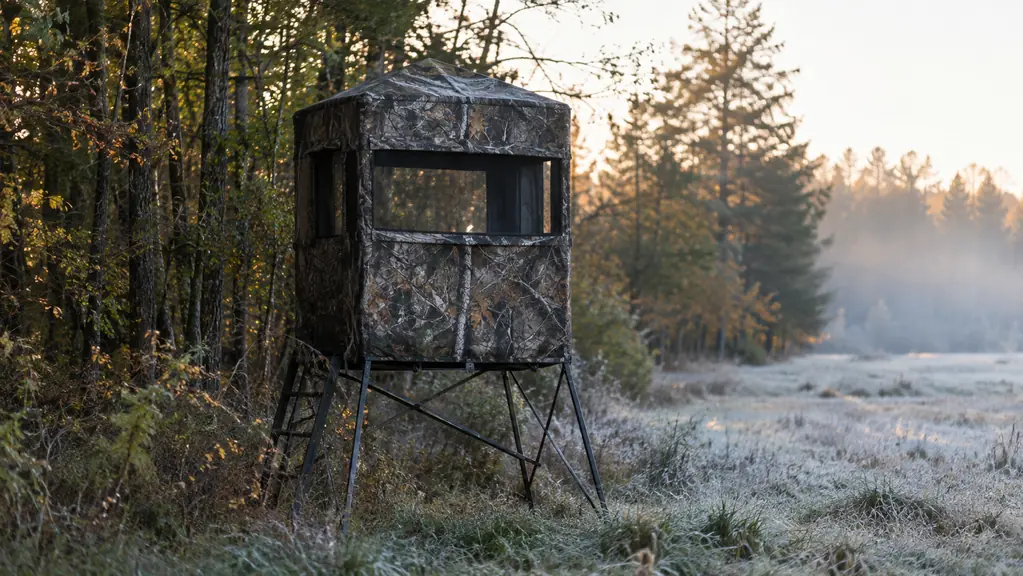
If you have spent much time hunting whitetail from the ground, you know the cheap blind problem. You buy one on sale, it looks great in the yard, and by the third hunt the wind has flipped a corner, the windows sag, and you spend more time fiddling with stakes than watching the field. I have owned three of those. So when I set up the Ameristep Caretaker before bow season last fall, I told myself I would not judge it on the first afternoon. I would judge it in February, after a full Minnesota season of frost, wind, snow, and one very wet dog named Tucker.
This is that review. I am Wade Harlan, 58, retired lineman, and I hunt a mix of public land and a small family parcel outside Brainerd. The blind went up the last week of September and came down for good in early January. It sat through bow season, rifle season, and most of the muzzleloader season, which means it took more weather than most blinds ever see. I kept a notebook in the truck and wrote down what worked and what did not after every sit, so what follows comes from real days in the field, not from memory. Here is what the Ameristep Caretaker actually did over those months.
The Quick Verdict
The Ameristep Caretaker is the rare ground blind that feels bigger inside than it looks outside, sets up in about five minutes, and shrugs off a northern winter. The zipper on the main window needs care in deep cold, and the included stakes are too light for bare ground, but this is the blind I would buy again tomorrow.
Amazon Check Today's Price →A ground blind that actually lasts a season
After a full fall and winter of real use, the Ameristep Caretaker is the blind I trust for every hunt. Check today's price on Amazon and see why it holds up when the weather turns.
Amazon Check Today's Price on Amazon →How I've Used It
I set the Caretaker up on the north edge of a picked soybean field, about forty yards from a well-used trail that runs into a thick cedar stand. That spot gets wind off the lake most mornings, so the blind had to handle constant pressure on its panels. The first setup took me eight minutes, and that included reading the instructions, which I rarely do. The hubs lock with a firm push and the center pole seats with a solid click. I have set up a lot of blinds that fight you on the last corner; this one did not. I also set it up alone in the dark on the morning of October 18, wearing a headlamp and gloves, and had it staked and brushed in before shooting light. That is the test that matters for a guy who hunts weekdays before work. I also learned to tuck the window straps in before I sat down, because a loose strap taps the fabric in a breeze and a deer will hear that long before it sees you.
From early October through the first week of January, the blind was up for roughly sixty days of actual hunting. Some of those were ten-hour sits in a cold drizzle. Several were snow events where the roof collected four or five inches overnight. Tucker rode along on the bird hunts and sometimes waited in the blind with me during the late season, so the floor took dog nails, mud, and the occasional wet dog shake. I mention all of this because a blind that only works in perfect conditions is not a hunting blind, it is a tent with a pattern on it. On the worst morning, a steady rain that started at 4 AM and never quit, I sat from first light until ten and the only wet thing in the blind was the muzzle of my rifle when I poked it through the mesh.
The Ameristep Caretaker also went along on a three-day early season trip where it rode folded in the back of my pickup under a topper with decoys, a cooler, and a chainsaw on top of it. When I pulled it out at camp, the fabric was creased but not damaged, and the hubs still opened without a fight. That is the test that kills most budget blinds, and it passed. I packed and unpacked it nine times over the season, and on the last trip the carry bag zipper still closed one-handed.
What the Ameristep Caretaker Does Well
The first thing you notice inside the Ameristep Caretaker is the room. The hub design gives you a floor footprint that feels closer to a small tent than a typical pop-up blind. I am 6 feet tall and I could stretch my legs out, lean back against the wall, and still have room for a backpack, a bow case, and Tucker curled in the corner. One afternoon at camp I measured it out of plain curiosity: lying flat on the floor with my boots off, my head and my toes both cleared the walls, and I am not a small man. On a cold November morning when you are in the blind for five hours, that extra space matters more than any other feature on the list. It also means two hunters can sit without bumping elbows, which is why I used it for a weekend sit with a friend during rifle season.
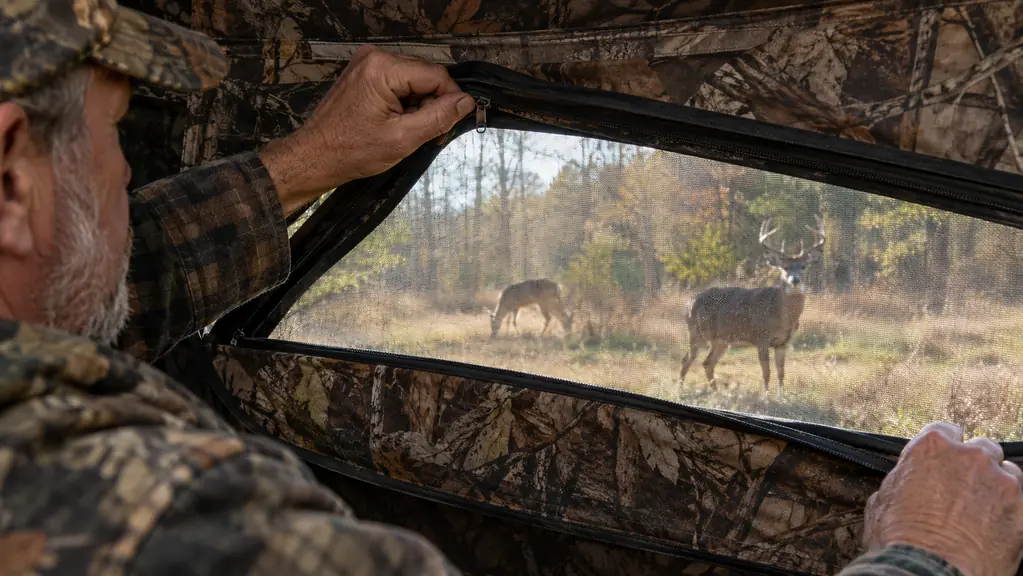
The windows are the second thing. The Ameristep Caretaker has a two-way window system with a shoot-through mesh and a quiet zipper on the main panels. From inside, the mesh hides movement well. I had a doe walk past at eight yards and stop to look directly at the blind; she stared for maybe thirty seconds, then went back to feeding. That is the outcome you want from a ground blind, and it repeated itself all season. The opaque flaps roll up and secure with straps, and when they are down the blind goes dark, which helps keep you hidden from late-arriving deer. The mesh on the Caretaker is also dark enough that I never had to squint against glare, which was a problem on the last blind I owned.
Weatherproofing is where the Ameristep Caretaker separates itself from the cheaper end of the market. The fabric is a woven polyester with a water-repellent coating, and the roof is a heavier material that shed snow instead of sagging. After a night of freezing rain, the panels were stiff but dry inside, and the floor stayed dry even when the ground around the blind was wet. The hub poles held tension well. I did not have a single panel collapse or a corner flip on a windy day, and we had several days with gusts over thirty miles an hour. One November afternoon the wind was steady out of the northwest at twenty-five, and I watched the cattails lay flat while the blind sat square and quiet.
How It Performed Over a Full Season
The honest way to review a hunting blind is to track it like a piece of equipment, not a photo prop. Here is what the Ameristep Caretaker looked like month by month. In October, the blind was quiet, dry, and easy to set up in the dark. The mesh windows had no glare in low light, which is something I have not been able to say about cheaper blinds. I hunted nine mornings out of the blind before the leaves turned, and every one of those sits ended with the blind as dry inside as it started. In November, the blind took the real test: rifle season, heavy foot traffic in the area, and a stretch of cold rain. The water beaded on the roof and the interior stayed dry. The zippers still ran smooth.
December is where things got interesting. The temperature dropped to single digits for a week, and the zipper on the main shooting window started to stiffen. It did not break, and it never stuck completely, but it required a firm pull and a little patience. The fabric also got noisy when it was frozen stiff, which is worth knowing if you plan to adjust your setup in extreme cold. The Ameristep Caretaker's hub locks held up fine, and the poles did not pop loose even when the ground was frozen and the stakes were doing very little. The morning of December 14 was the worst sit of the season, a high of two above zero with a north wind, and the blind stayed standing while a pop-up I had set up nearby for a buddy lost two corners by mid-morning.
By January, the blind had a few small crease marks where it had been folded and packed for the camp trip, but no tears and no failed seams. The zipper on the side window, which I used for Tucker to poke his head out, still worked. The elastic loops that hold the window straps in place were as tight as day one. I took the blind down in a light snow, folded it the way the instructions show, and it fit back into the carry bag with room to spare. I also spent ten minutes with a soft brush knocking the dried mud out of the floor seams before I packed it, and that was the only maintenance it needed all season.
I had a doe walk past at eight yards and stop to look directly at the blind. She stared for maybe thirty seconds, then went back to feeding. That is the outcome you want from a ground blind.
Where It Falls Short
No review is honest without the downsides, and the Ameristep Caretaker has three worth naming. The first is the included stakes. They are thin metal pins that work fine in soft dirt, but on the rocky ground I hunt in parts of northern Minnesota, they bent. The first one bent on the third morning, when I tried to seat it through a patch of frost with the heel of my boot. I replaced them with heavy-duty ground screws after the second week, and I would tell anyone buying this blind to plan on doing the same. It is a small cost and it makes the blind dramatically more stable in wind. With the factory stakes in soft dirt the blind is fine; on hard ground, plan ahead.
The second is the zipper in deep cold. As I said, the main window zipper stiffened below about ten degrees. It never failed, but it was not as smooth as it was in October. A little silicone lubricant on the teeth fixed most of it, and I would recommend that as standard maintenance before every cold-weather hunt. I would also suggest working the zippers a few times at home before the season, because a brand-new blind's zippers are always a little stiff for the first couple of cycles. The third is the carry bag. It is functional, but the straps are thin and the bag has no padding. After a season of riding in the truck bed, the bag itself is worn even though the blind inside is fine. If you pack your gear like I do, with decoys and a chainsaw riding on top, expect to replace the bag before the blind. None of these are deal-breakers. They are small faults you learn to work around, and after sixty days I still put the blind up without hesitating.
What I Liked
- Sets up in about five minutes once you know the hub system
- Genuinely roomy inside, with enough space for two hunters and gear
- Quiet mesh windows that hide movement at close range
- Roof sheds snow and rain well, interior stays dry
- Holds up to a full season of cold, wind, and repeated packing
Where It Falls Short
- Included stakes bend on hard or rocky ground, plan to upgrade them
- Main window zipper stiffens in single-digit cold
- Carry bag is thin with no padding
- Fabric gets noisy when frozen stiff
Who This Is For
The Ameristep Caretaker is for the hunter who wants one blind that can do everything. If you hunt deer from the ground, set up on a food plot, tuck into a field edge, or chase turkeys in the spring, this blind covers all of it. It is also a great choice for anyone hunting with a kid or a first-timer because the extra room makes the sit more comfortable, and a comfortable hunter stays still longer. A first-time hunter I brought along sat through a full rifle opener without a single fidget, and I credit the room as much as the deer. If you are the kind of person who keeps gear for a decade and expects it to earn its place in the truck, the Ameristep Caretaker is worth a hard look. It is not the lightest blind on the shelf, but it is the one I reach for when I only get one chance at a sit.
Who Should Skip It
If you are a run-and-gun hunter who sets up in a new spot every morning and wants the lightest possible blind on your back, the Caretaker is heavier than a backpack-style blind and you will feel it on a long walk in. I carried it a quarter mile into public land one morning and I noticed the weight; it is not brutal, but it is not nothing. If you only hunt a few times a year in mild weather, you can save money with a simpler blind and never notice the difference. And if you refuse to do any maintenance, the zipper stiffness in deep cold will annoy you. For everyone else, this is the blind I would pick, and the one I will set up again next September.
Set up with a blind that lasts the whole season
The Ameristep Caretaker earned its place in my truck. If you want a ground blind that holds up to real weather and real use, check today's price on Amazon before your next hunt.
Amazon Check Today's Price on Amazon →