

Here's the short answer, the one I'd give you across the bait shop counter: if you want a rod and reel that work together the day they show up, and you'd rather spend your evening fishing than reading gear forums, the KastKing Centron combo is the better buy. If you already know you want a specific rod action, a specific reel size, and a specific gear ratio, and you're willing to pay for each piece on its own, buying separately wins. I've fished both ways for thirty-five years. Both are honest approaches. They just fit different anglers.
The Centron comes in spinning and baitcasting versions, and both pair a KastKing rod with a KastKing reel, matched at the factory so the two balance the way the designer intended. That matters more than most people think. An unbalanced setup wears on your wrist by hour three. A matched one disappears in your hand. At the time I'm writing this, the combo sits at a 4.4-star average across more than two thousand reviews, which lines up with my own experience. It's not perfect, but it does what it promises.
| KastKing Centron combo | Buying rod and reel separately | |
|---|---|---|
| Price | A matched combo almost always costs less than buying the two pieces on their own | You pay a premium for the freedom to mix and match |
| Ready to fish | Arrives matched and balanced, ready to spool | You research, match, and assemble the pair yourself |
| Balance | Factory-matched so the rod and reel work as one unit | Good balance depends on your choices |
| Choice | One rod, one reel, one setup | Any rod, any reel, any line class you want |
| Upgrade path | When you outgrow it, you replace the whole combo | Swap the reel, keep the rod, or build up piece by piece |
| Warranty | One KastKing warranty covers the whole unit | Two makers, two warranties, two phone calls |
| Best for | First combo, backup rod, boat rod, travel rod | Anglers who fish one technique and want it exact |
The Case for a Matched Combo
The idea behind any combo is simple: someone who knows rods and reels has already made the decisions for you. They picked a rod length, a rod action, a reel size, and a gear ratio that work together, then they priced the pair to move. That's a real advantage when you're starting out or when you just want a dependable second setup. You're not gambling on a pairing. You're buying a tested one.
The flip side is that a combo is a compromise by design. The factory builds it to fish a little bit of everything, which means it doesn't excel at any one thing. That's not a flaw. It's the trade you're making. You trade a perfect match for a good match, and you trade the ability to customize for the convenience of having it all in one box. For most anglers, most of the time, that trade is worth it.
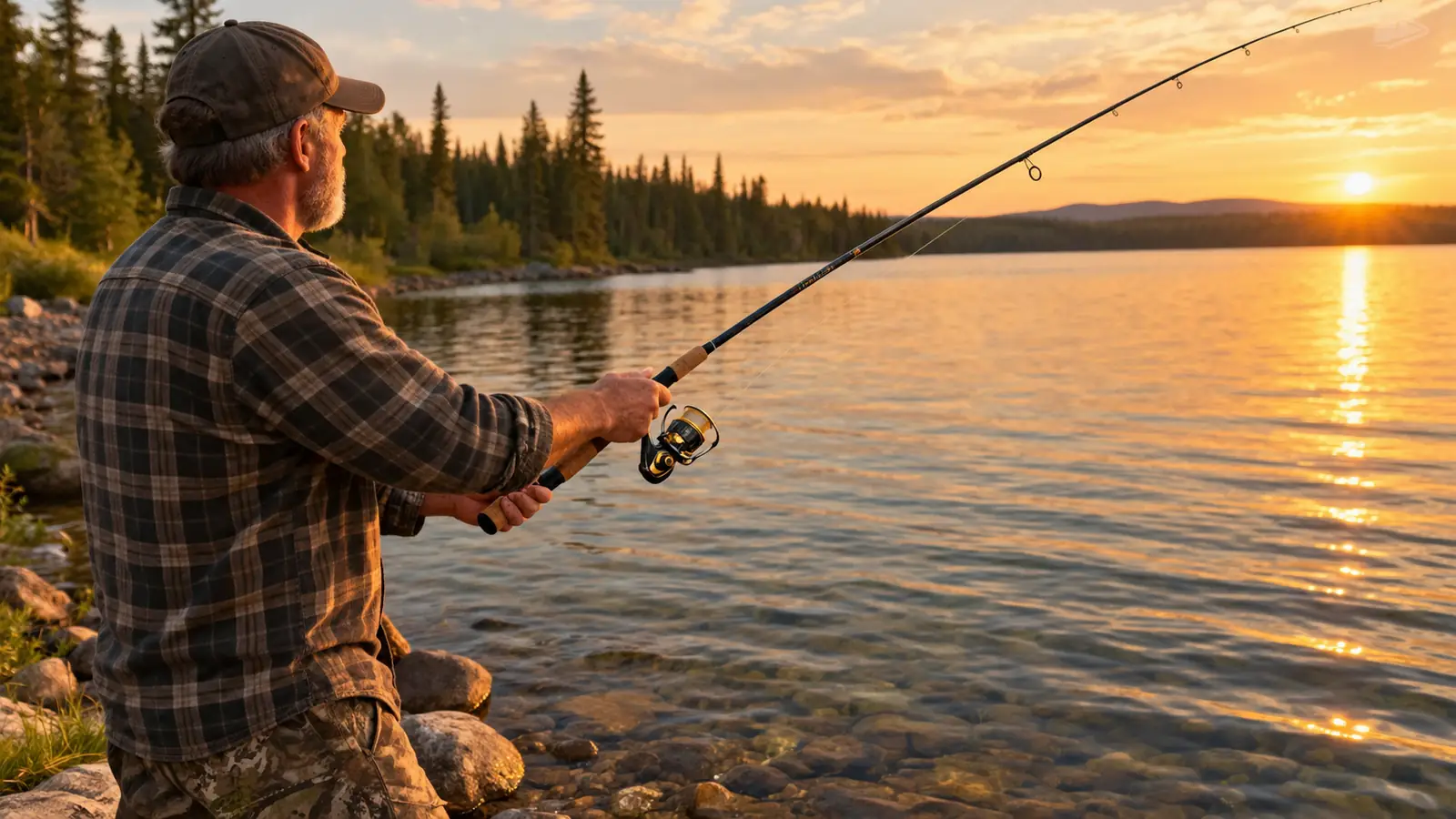
Where the KastKing Centron Wins
The biggest win is the one you can't see on paper. A factory-matched combo is balanced before you ever spool it. The reel seat sits where the rod builder wanted it. The guides match the rod's power. The reel size matches the rod's length and action. You tie on a jig and go. For someone who fishes a few weekends a year, that's the whole difference between a good trip and a frustrating one spent fighting your own gear. The Centron is a generalist, and generalists have a real place in a tackle collection, because most of us fish more than one technique in a day.
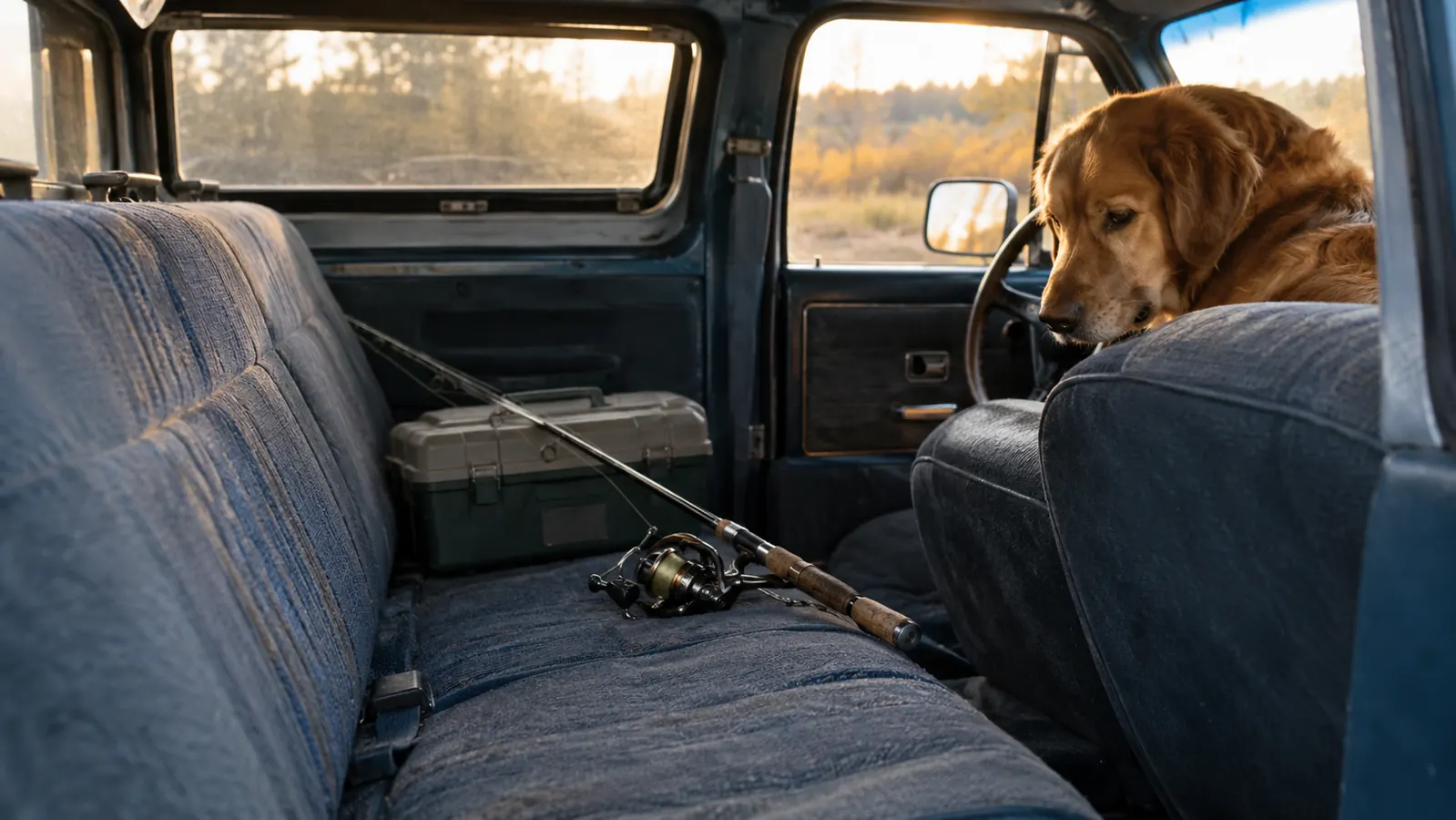
The Centron also earns its keep as the rod that lives in the truck. Mine rides behind the seat of my pickup next to a couple of tackle boxes. Tucker steps on it, it bounces over gravel roads, and it has never once complained. The two-piece design breaks down short enough to fit under the topper, which means it's always with me. When the walleye bite picks up and I want a second rod rigged with a different bait, I grab the Centron without a second thought. One evening last June, I was heading home from town and spotted a hatch coming off a small lake off County Road 11. I pulled over, had the Centron rigged with a leech in under two minutes, and landed two walleyes before the light gave out. A one-piece rod would have been in the basement at home. The Centron was right there behind the seat. That convenience is worth more than any spec sheet, and it's the reason this combo has a permanent spot in my rotation.
Where Buying Separately Wins
Buying separately wins when you know exactly what you want. If you fish jerkbaits all spring and need a rod with a soft tip and a reel with a high gear ratio, no factory combo is going to match that perfectly. You're buying a tool for one job, and you want it precise. The Centron is a generalist. A custom pairing is a specialist. The angler who fishes one technique hard, weekend after weekend, will always be better served by choosing each piece himself, because he knows the water he fishes and the way he works a lure better than any factory designer does.
The other big win is the upgrade path. Buy a nicer reel now and put it on the rod you already own. Next year, buy a better rod and move that reel onto it. You never throw away a whole setup just to improve one piece. Over ten years, that's real money saved, and you end up with gear that fits your style instead of gear that fits a price point. If you enjoy the process of dialing in your gear, buying separately is half the fun of fishing. If you don't, it's just homework.
If you'd rather fish than research, this is the easy call.
The KastKing Centron shows up matched, balanced, and ready to spool. No forums, no guesswork, no second-guessing. That's the kind of simple that gets you on the water this weekend instead of next month.
Amazon Check Today's Price on Amazon →Why Balance Matters More Than the Spec Sheet
Here's the thing about balance that doesn't show up in the product photos. Hold a rod and reel that don't match and you'll feel it in the first twenty minutes. The rod tip wants to drop, so you grip tighter. Your forearm starts to ache. You stop noticing the lake and start noticing your wrist. A matched combo like the Centron is designed so the reel seats at the balance point of the rod, which means you hold it the way you're supposed to hold it, loose and relaxed.
I've handed the Centron to friends who fish twice a year, and not one of them has complained about it feeling heavy or awkward. That's not an accident. It's what factory matching is for. When you buy a rod and reel separately, you have to know how reel weight, reel seat position, and rod power interact. Some guys can do that in their head. Most of us learn by buying something that doesn't balance and then buying again. The combo skips that lesson. I learned it the hard way with a spinning outfit I bought in the early nineties. The reel sat so far back that the rod tip sagged toward the water every time I let my hand relax, and I spent a full day on Pelican Lake fighting it before I gave the whole setup away. The Centron never makes you think about where your wrist is.
How the Centron Earned Its Spot in My Truck
My Centron has spent two full seasons riding behind the seat of my pickup. It's been stepped on by Tucker, buried under waders, and bounced down a gravel road that rattles the teeth out of your head. The two-piece design means it breaks down to a size that fits under the topper, so it's always there when I decide to stop at a lake on the way home. I can't say that about any of my one-piece rods.
The reel has held up better than I expected for a combo at this level. The drag is smooth enough for walleye and bass, and I've landed a few northerns on it that had no business being caught on light tackle. One afternoon last August, a 34-inch northern grabbed a spinnerbait I was slow-rolling for bass along a weed line on Gull Lake. The drag sang for maybe eight seconds before the fish turned, and I got it to the boat without a single panic moment. I didn't expect that kind of composure from a combo reel at this level. It's not the reel I reach for when I'm jigging deep structure all day. It's the reel I reach for when I need a second rod rigged and ready in sixty seconds. That role matters more than you'd think.
The Tradeoffs Nobody Puts on the Box
Let me be straight about the downsides, because every honest comparison has them. A combo like the Centron is built to a price point, which means the components are chosen to keep the cost down, not to impress a gear snob. The rod blank is heavier than what you'd get on a premium rod. The reel is smooth, but it's not going to win any awards against a high-end model. You'll feel the difference if you fish all day, every day. It's not the setup you bring to a tournament. It's the setup you bring to a Tuesday evening on the lake. A couple of summers ago I ran the Centron for a full day of jigging on Mille Lacs, working 28 feet of water with a half-ounce jig. By midafternoon my forearm knew the blank was heavier than my usual rod, and I switched back before the evening bite. It wasn't a failure. It was just the honest limit of what a generalist combo does.
The other tradeoff is the upgrade path, or the lack of one. With a combo, when you want better gear, you replace the whole thing. That's fine when the whole thing costs what a combo costs. It's a bigger deal if you bought the combo hoping to grow into it. The Centron is a great place to start and a great backup to keep. It is not the last rod you'll ever buy. Plan on that and you won't be disappointed.
Who Should Buy Which
Buy the Centron if you're new to spinning gear, if you want a second rod that rides in the truck all season, if you're setting up a kid, or if you just want one less decision in your life. It's the rod I hand to a guest who says they haven't fished in ten years. It does everything well enough that the person holding it looks good, and if it takes a beating from a wet dog or a boat deck, it's not a tragedy to replace. That's the quiet strength of a good combo.
Buy separately if you fish one technique hard, if you already own a rod you love and just need a reel to match it, or if you get real enjoyment out of tuning your gear. There's nothing wrong with that. Half the guys at the boat launch are running custom pairings they've dialed in over years. But most of them also own a combo like this, because every serious angler needs a rod that can take abuse and not cost a fortune to replace. The two approaches aren't enemies. They're two tools in the same box.
The Five-Minute Decision
Stand in front of your rod rack and be honest. If the Centron would be your third or fourth setup, and you can picture exactly where it lives in the boat, buy it. If it would be your only rod, and you fish more than twenty weekends a year, buy the separate pieces and take the time to get them right. Your fishing will thank you either way, because the real mistake is buying the wrong thing twice.
Also be honest about whether you'll actually enjoy the research. Some guys love reading reel reviews the way other guys love reading engine specs. If that's you, buying separately is part of the fun. If you'd rather be on the water, the Centron is the shortcut that doesn't feel like one. It's not the fanciest setup in the boat. It's the one that never gives you a reason to think about it, and that's a higher compliment than it sounds like.
The bottom line on the KastKing Centron
It's the combo I hand to guests, keep behind the seat, and grab when the bite is on and I need a second rod in five seconds. Honest gear at a fair price, and it has earned its spot in my truck. If that sounds like your kind of setup, check today's price on Amazon.
Amazon Check Today's Price on Amazon →