
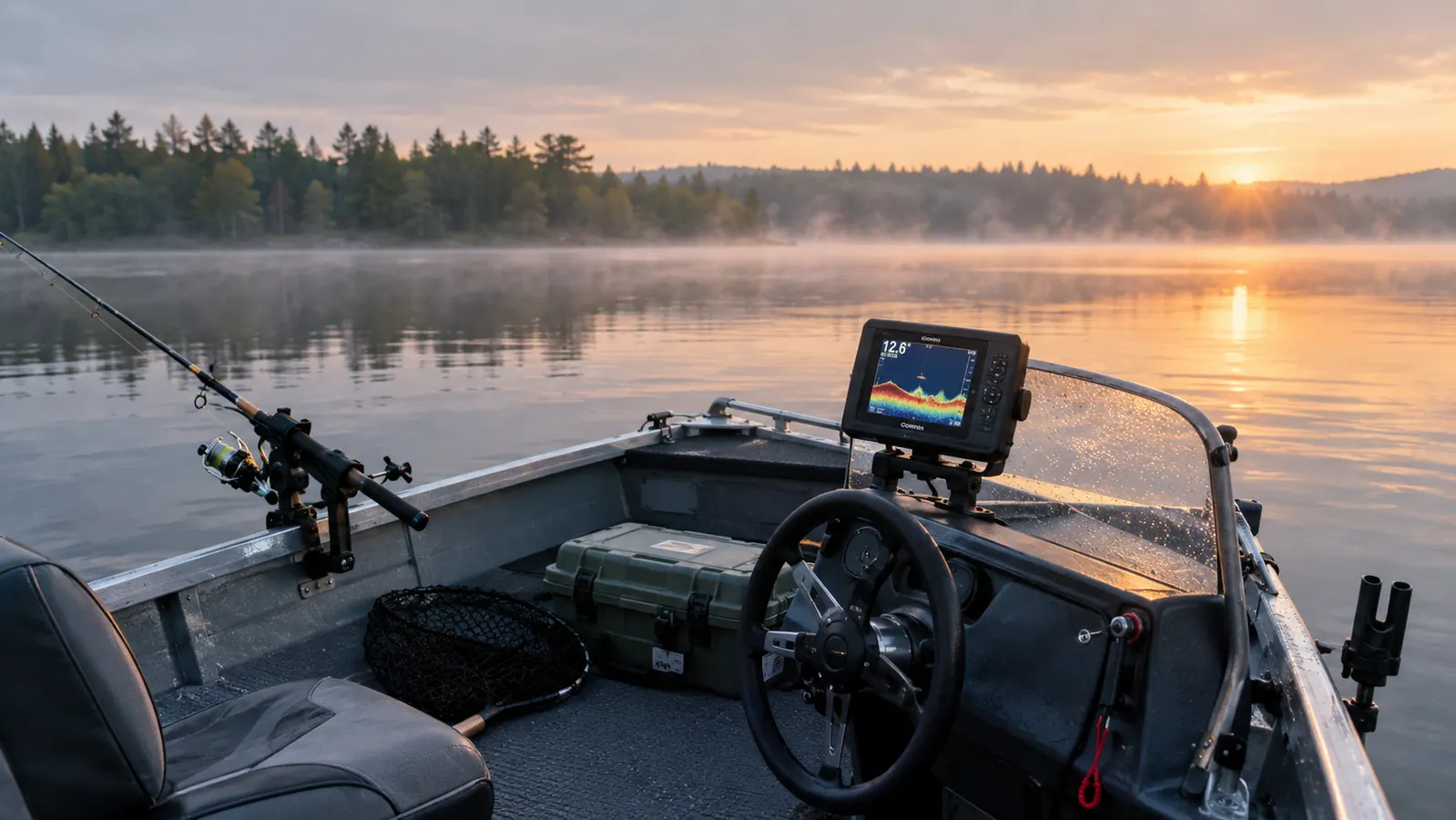
I ran the Garmin Striker 4 on my 16-foot aluminum boat for a full season of walleye and bass fishing, from ice-out in late April through the first cold week of October. It is the cheapest fish finder Garmin makes, and after roughly 40 trips on the water, I can tell you exactly what that price gets you and what it does not.
If you fish small lakes and rivers from a jon boat, a kayak, or a canoe, the Striker 4 is probably the only fish finder you need. If you fish big water, trolling deep, or running waypoints in heavy current, you will want something bigger. Here is the honest breakdown.
The Quick Verdict
The Garmin Striker 4 is the best budget fish finder I have used in 30 years of fishing. The screen is small and the maps are basic, but the sonar is genuinely good, the GPS works, and it has taken a beating all season without a single failure.
Amazon Check Today's Price →The budget fish finder that earned its spot on my boat
After a full season of use, the Garmin Striker 4 is still the first thing I would recommend to anyone fishing small water on a budget. Check today's price on Amazon and see if it fits your boat.
Amazon Check Today's Price on Amazon →How I've Used It
My setup is simple: a 16-foot aluminum boat with a 25-horse outboard, a trolling motor up front, and the Striker 4 mounted on a RAM ball at the console. I ran the included transducer on the transom with the plastic bracket, not epoxy, because I wanted to see if the stock mount would hold up. It did, through rough water and all.
I used it three or four ways almost every trip. First, as a plain depth finder, which is what it does best. Second, as a way to mark brush piles and rock piles I found, so I could come back to them later. Third, as a rough contour map of the lakes I fish most. I did not use it for ice fishing, but I know several guys who do, and the cold-weather performance is one of the reasons I picked it over a couple of other budget units.
Early in the season, on the first Saturday in May, I spent the morning working a stretch of the Mississippi backwaters near Brainerd that I had not fished in years. The Striker 4 showed me a channel edge I had been missing for a decade, a drop from 6 to 14 feet that held walleyes all morning. I caught three keepers off that edge before noon and marked it on the GPS for the rest of the summer. That was the moment I stopped thinking of this as a cheap unit and started thinking of it as the right unit.
Tucker, my yellow Lab, rides along on every trip, and the unit has been splashed, rained on, and left in the boat overnight more times than I care to admit. It has not missed a beat.
What the Striker 4 Actually Does Well
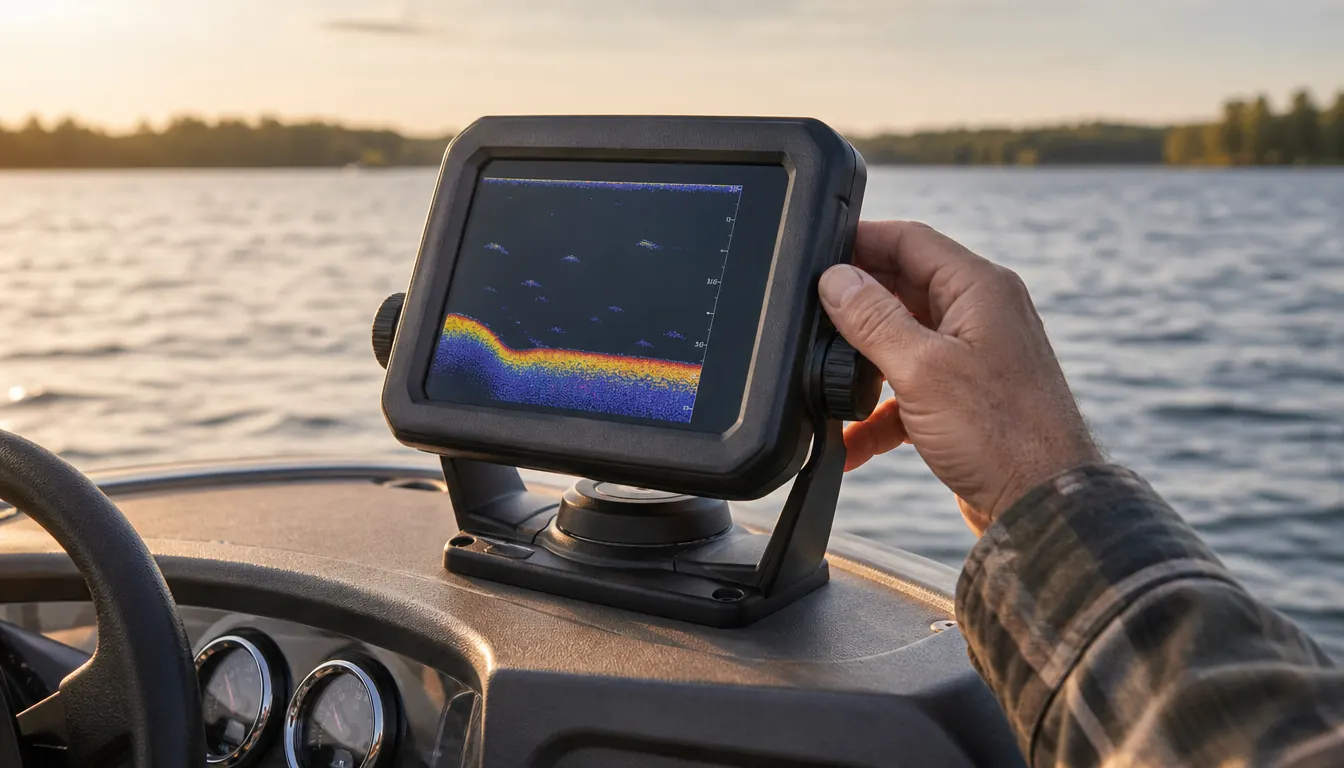
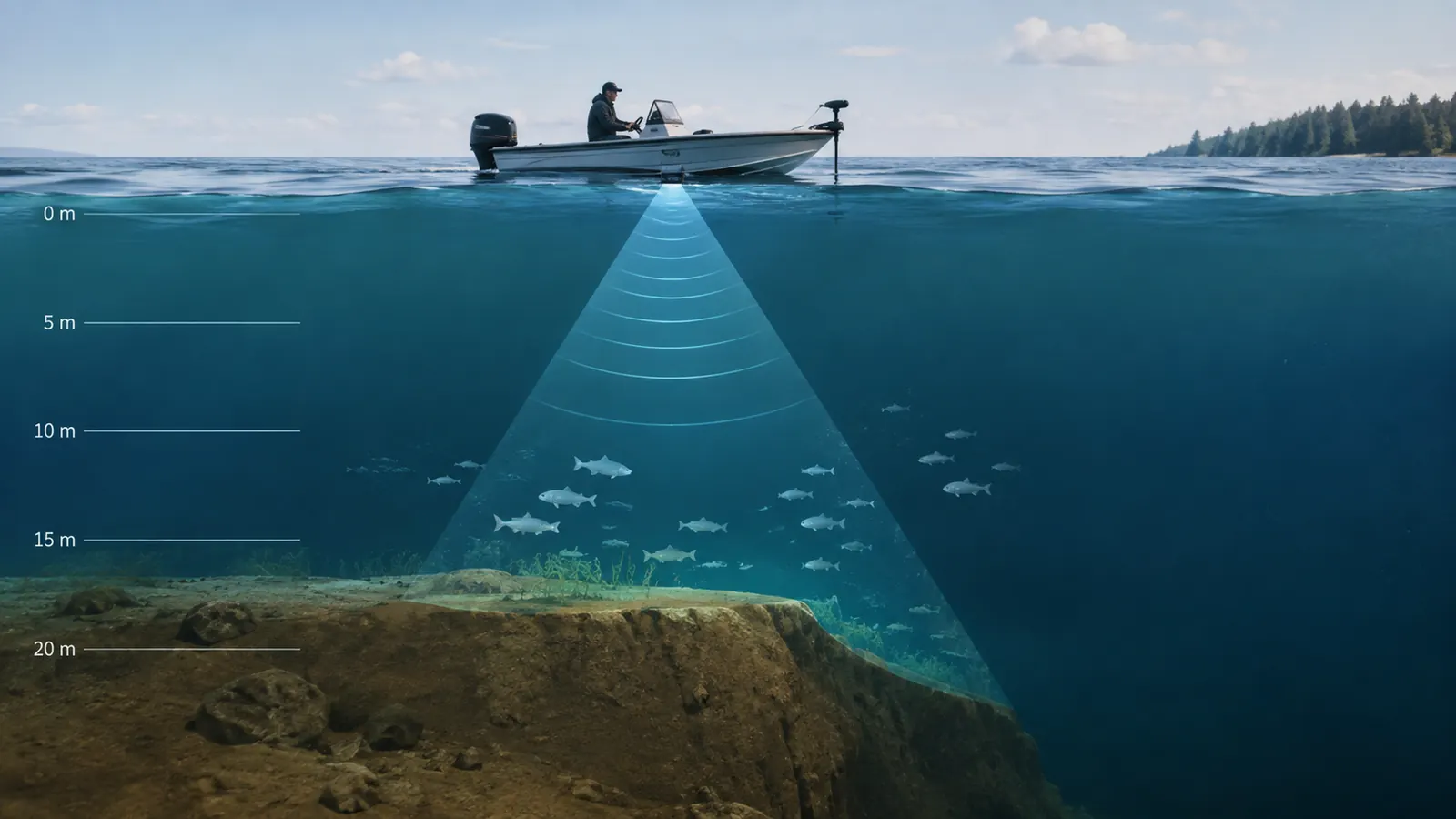
The sonar is the heart of this unit, and it is genuinely good. The Striker 4 uses Garmin's CHIRP sonar, which sends a sweep of frequencies instead of a single ping. On the water, that means better target separation and a cleaner picture of fish holding tight to the bottom. I marked walleyes in 30 feet of water that my old flasher would have painted as a single red blob.
One evening in late June I was fishing a point that drops into 32 feet of water, and the screen showed two distinct marks holding about a foot off the bottom, separated by maybe 18 inches. My old flasher would have shown one fat blob and I would have guessed. I dropped a jig straight down and caught a 19-inch walleye on the first drop, then another on the second. That is the difference CHIRP makes at this price, and it is the reason I would buy the unit again tomorrow.
The 3.5-inch screen sounds small, and it is small, but it is bright enough to read in direct sun with the backlight turned up. I wear prescription sunglasses most of the summer, and I never had to lean in or squint the way I expected to. The screen is not touch, which I consider a feature. Gloved hands, wet hands, and screen protectors all work fine with buttons.
GPS is where this unit surprises people. For the price, you get a built-in GPS that records your track, marks waypoints, and shows your position on a basic contour map. I marked a rock pile on the south end of the lake in May, and I hit it within a boat length in September. That alone is worth the money if you fish structure.
The Garmin Striker 4 also does something a lot of budget units skip: it saves your sonar history and lets you scroll back through it. When I motored past a school of fish and marked them on the way by, I could scroll back, see exactly where they were, and drop a waypoint right on top of them. That feature sounds like a gimmick until you use it twice.
Where It Falls Short
The maps are the biggest compromise. The Striker 4 does not come with a detailed lake map. What you get is a basic outline with depth contours that Garmin builds from its own data, and on smaller lakes that data can be thin. On one lake I fish, the contour lines stop about 50 feet from shore, which is exactly where the walleyes like to hold. You are not buying this unit for the maps. You are buying it for the sonar and the GPS, and the maps are a bonus that ranges from handy to nearly useless depending on the lake.
The map issue cost me a morning in August. I was fishing a lake I had never been on, a 400-acre lake north of Pillager, and the contour lines on the screen stopped about 60 feet from shore. I spent two hours guessing where the old river channel ran, and I never did find it. On the lakes I fish every week the maps are fine, but on unfamiliar water I still carry a paper map in the boat, which feels like a step backward.
The screen is small, and there is no way around that. If you are running a bigger boat with a console that sits far from your seat, or if your eyes are not what they used to be, you will find yourself leaning forward more than you want to. I am 58 and I manage fine, but I would not want to run this unit from the back deck of a 20-foot bass boat.
The transducer cable is also shorter than I would like. On my 16-footer it reached the console with a few inches to spare, but only because I routed it through the gunnel. On a longer boat, or a boat with the console in a different spot, you may need an extension or a different mounting plan.
And the unit does not come with a lake map card slot, so you cannot add Garmin's detailed maps later. What you buy is what you get. That is fine at this price, but it is worth knowing before you buy.
I marked a rock pile in May and hit it within a boat length in September. That alone is worth the money if you fish structure.
How the Sonar Performed Over a Full Season
I kept a log of the first 20 trips, mostly out of curiosity. The Striker 4 marked fish in every one of those trips, and on 16 of them it marked fish that produced at least one keeper. That is not a scientific test, but it matches what I would expect from a good sonar unit: it does not catch fish for you, but it keeps you from wasting time on empty water.
The best day came in early September. The lake was flat calm, the water had turned over the week before, and the screen lit up with a school of bass holding on a hump in 18 feet of water. I marked the waypoint, circled back, and caught five bass in twenty minutes, all on the same crankbait. The unit did not make that happen, but it turned an empty stretch of water into the best hour of my season. That is the honest case for owning one.
The CHIRP sonar shines in two situations. The first is deep water, 25 to 40 feet, where the wider frequency sweep keeps the bottom return crisp and separates fish that are holding tight to it. The second is shallow, weedy water, where the unit's ability to adjust power and frequency on the fly helps you see fish buried in the weeds. I ran it in 4 feet of water over cabbage weeds and could still pick out individual fish holding in the pockets.
The one thing I never got comfortable with is the default color palette. Garmin's default sonar colors are fine, but I found the unit's contrast settings needed adjustment on bright days. Once I set the brightness to auto and tweaked the contrast down a couple of notches, the screen was readable in every condition I fished. That is a five-minute setup, but it is the difference between a screen you can read and a screen you fight with.
What I Learned About Battery Life and Setup
The Striker 4 draws very little power. I ran it off the same small 12-volt battery that runs my trolling motor, and over a full day on the water I never once worried about the draw. On one long Saturday in July, I ran the sonar from 6 in the morning until almost 7 at night, with the screen on bright the whole time, and the battery still cranked the outboard at the end of the day. That matters to me because I do not have a second battery on the boat.
Setup took me about an hour and a half from opening the box to seeing bottom in my driveway. The bracket is simple, the cables are labeled, and the unit walks you through the basics on first power-up. The only part that took longer than expected was routing the transducer cable through the gunnel. I used a piece of stiff wire to pull it through, and I would recommend doing the same instead of trying to push it from the transom.
The Pros and Cons
What I Liked
- CHIRP sonar is genuinely good for the price, with clean target separation in deep and shallow water
- Built-in GPS with waypoints and track recording, accurate enough to find a marked rock pile months later
- Screen is readable in direct sun, and the buttons work fine with wet or gloved hands
- Sonar history recording lets you scroll back and drop waypoints on fish you motored past
- Simple setup, low power draw, and the stock transducer mount held up all season
- Took splashes, rain, and a wet dog in the boat without a single failure
Where It Falls Short
- Built-in maps are basic, with thin contour data on smaller lakes and no card slot to upgrade
- 3.5-inch screen is small if you are running a bigger boat or your eyes are not what they used to be
- Transducer cable is short, so routing takes planning on longer boats
- No networking, no live sonar, and no way to add better maps later
Who This Is For
The Garmin Striker 4 is for the angler who fishes small water from a small boat, a kayak, a canoe, or the bank. It is for the guy who wants to know how deep the water is, where the drop-off is, and whether there are fish holding on it, without spending a week's pay. It is for the person who wants a GPS to mark a brush pile and find it again next weekend. If that sounds like you, this is the unit to buy.
It is also a great first fish finder. The controls are simple enough that you can learn them on the water, and the price means you are not out a lot of money if you decide fish finders are not for you. I have loaned mine to two friends who were on the fence, and both ordered their own within a month.
Who Should Skip It
Skip the Striker 4 if you fish big water. On a 20-foot boat with a console that sits far from the driver, the 3.5-inch screen is too small to read comfortably. Skip it if you need detailed lake maps for unfamiliar water, because the built-in maps are basic and you cannot add better ones. And skip it if you want to network multiple units or use a live sonar feature, because this unit does not do any of that.
If you are shopping for a unit for a bass boat or a Great Lakes trolling setup, spend the extra money on something with a bigger screen and better maps. The Striker 4 is a tool for a specific job, and it does that job better than anything I have used at the price. But it is not trying to be a do-everything electronics package, and you should not buy it expecting one.
The Bottom Line
The Garmin Striker 4 is the best value in fishing electronics I have used in 30 years. It is not perfect. The screen is small, the maps are basic, and the transducer cable is short. But the sonar is genuinely good, the GPS works, and the thing has taken a full season of splashes, rain, and a wet dog in the boat without a single failure.
If you fish small water and you are tired of guessing where the bottom is, this is the unit to buy. It will not catch fish for you, but it will put you over them more often than not. That is all I ask of any piece of gear, and the Garmin Striker 4 delivers it trip after trip.
Ready to see the bottom for yourself?
The Garmin Striker 4 has earned its spot on my boat for another season. Check today's price on Amazon and see if it earns one on yours.
Amazon Check Today's Price on Amazon →