
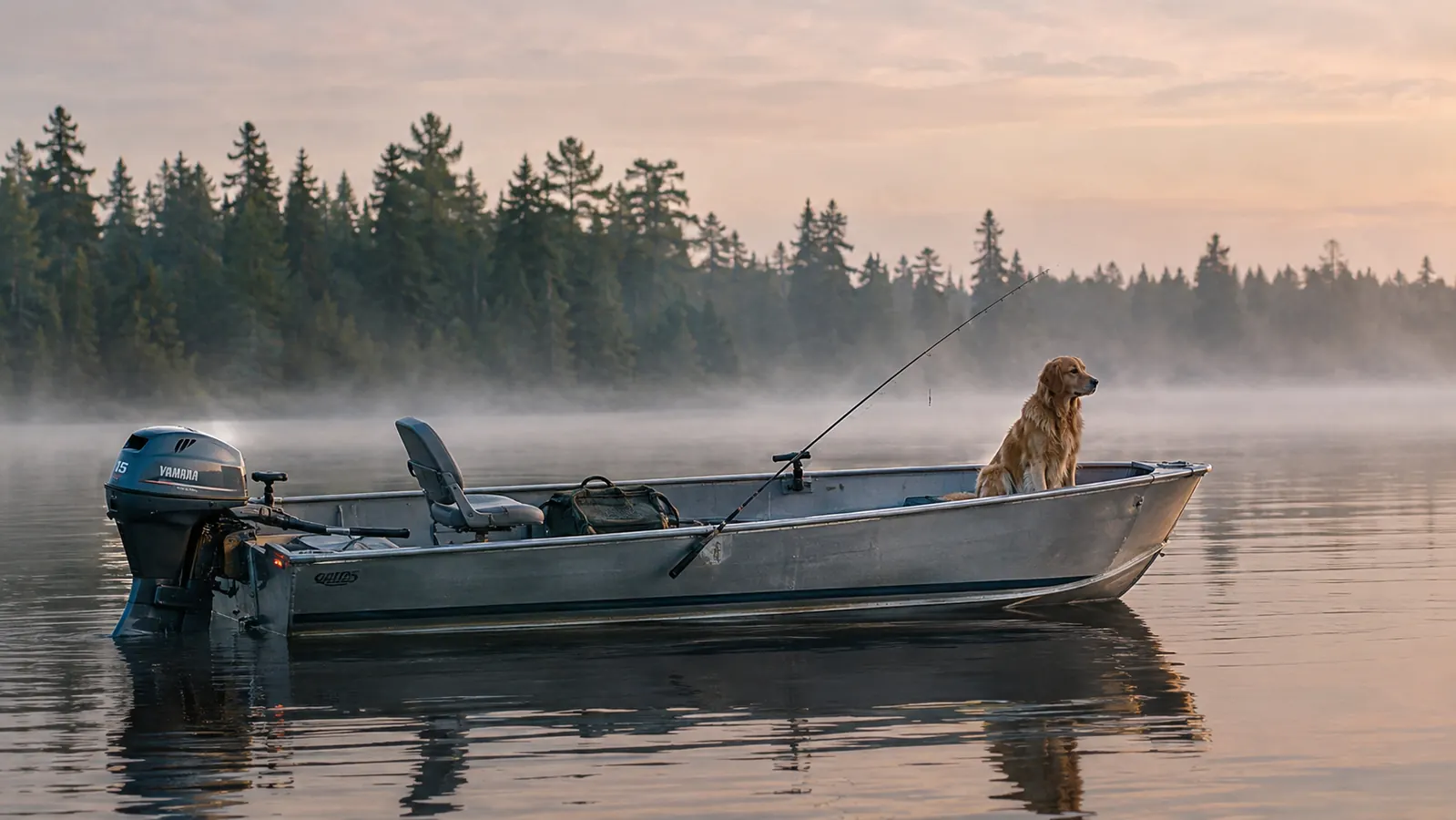
I grew up fishing these lakes the same way my dad did. You picked a spot by the color of the water, the way the wind pushed the weeds, and where the gulls were working. That skill still matters. But last spring I mounted a Garmin Striker 4 on the console of my 16-foot aluminum boat, and I will be honest with you: it changed how I fish more than any rod or reel I have bought in twenty years. This is a comparison between the Garmin Striker 4 and reading the water by eye, and which one fits you depends on where you fish and how much time you have on the water.
The short answer is that they are not really competing tools. One is a skill you build over years. The other is a screen that shows you what is under the boat right now. Most anglers I know end up using both, and the honest question is which one you should start with, and whether a small fish finder is worth the money and the wiring. I have fished with the Striker 4 for a full season on walleye and bass, and I have also spent plenty of days leaving it off just to keep my eye sharp. And I will tell you right now, before we go any further: I still use both, and you probably will too. Here is what I learned.
| Garmin Striker 4 | Reading the Water by Eye | |
|---|---|---|
| Exact depth and structure | Shows depth, drop-offs, and brush piles in real time | A surface-level guess that gets less reliable as the water deepens |
| Cost after the purchase | One-time purchase, no subscription or ongoing fees | Free, once you put in the years |
| Works in low light and murky water | Screen is readable in the dark and shows bottom through stained water | Needs daylight and water you can actually see into |
| Relies on batteries and electronics | Needs 12-volt power, and a dead battery means no readings | Nothing to charge, nothing to fail |
| Time to basic competence | Minutes to learn the basics | Years of on-the-water experience |
| Portability | One more unit to mount, store, and protect | You carry nothing extra |
| Best for | Unfamiliar lakes and finding structure fast | Home water you already know by heart |
Where the Garmin Striker 4 Wins
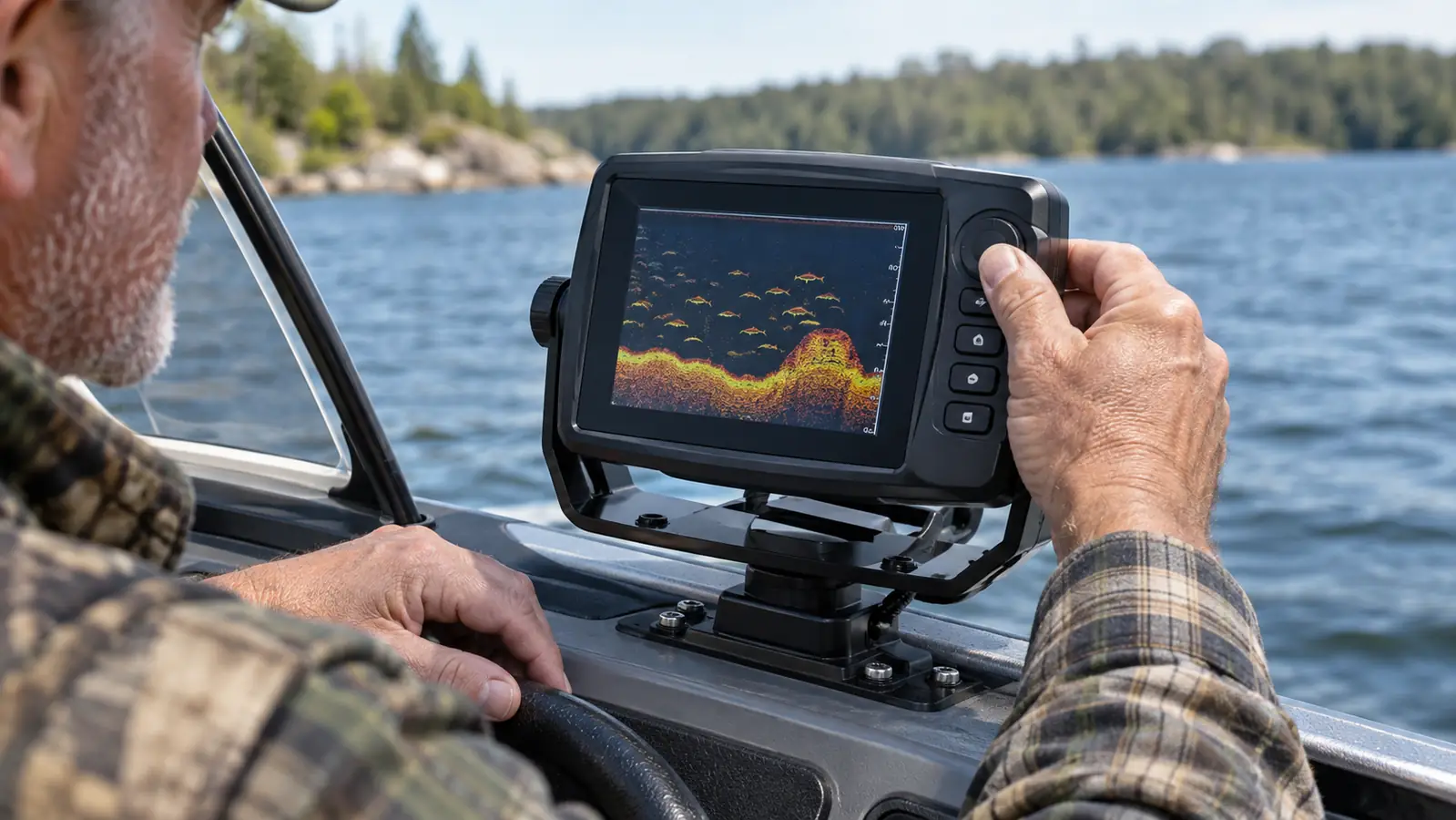
The biggest difference is that the Striker 4 replaces guesswork with facts. On a lake I fish once a year, I used to troll until I happened to cross a drop-off, then circle back and hope I could find it again. With the Garmin, I see the breakline before I reach it. The screen shows the bottom dropping from twelve feet to twenty-eight, and I can mark a waypoint and come straight back to it after lunch. For walleye in particular, that is the whole game. They sit on those breaks, and the fish finder puts you on top of them instead of trolling blind.
The other thing that surprised me is how well it works in water you cannot read by eye. On a windy day, the surface is too chopped up to tell much about what is below. The Garmin does not care. It reads bottom and structure through stained water, and it works after dark, which is when the biggest walleye often feed. The temperature readout is a smaller feature, but it tells you when the water is turning over in the fall, and that is worth a lot on a cold October morning.
Where Reading the Water by Eye Wins
Now the part that might surprise you, coming from a guy who just spent a season with a fish finder on his boat. Reading the water by eye wins in the places where a screen cannot help you. On a small creek or a river full of rocks, the Striker 4 is not much use, and the transducer can even be a hazard when you are fishing shallow. My 16-footer is fine on the lakes, but when I wade a river for smallmouth, the only gear I carry is what fits in my vest. No unit, no battery, no cables.
The skill also does something a screen never will: it stays with you. A fish finder can fail, batteries die, and screens are hard to read in a January wind. But the habit of reading the water, watching where the current bends, finding the weed line by the color change, that is free and it works on any boat, including someone else's. My dad read water his whole life and never owned a fish finder. He caught plenty. The two approaches are not enemies, but if I had to choose one for a lifetime of fishing unfamiliar rivers, I would keep the skill.
The fish finder that made me a better walleye angler in one season
The Garmin Striker 4 shows depth, structure, and water temperature on a screen you can read in sunlight, and it marks waypoints so you can return to the exact spot where the fish were biting. It is the most useful addition I have made to my boat in years.
Amazon Check Today's Price on Amazon →Who Should Buy Which
Buy the Garmin Striker 4 if you fish lakes you do not know well, if you chase walleye and bass on structure, if you fish early and late when the light is low, or if you are tired of burning half a morning trolling to find a breakline. It is also a good choice for someone new to open-water fishing who wants to learn what the bottom actually looks like. The waypoint feature alone is worth it on big water, because it turns one good day into a spot you can return to all season.
Skip it, for now, if you only fish a small home lake you could draw from memory, if you mostly wade small rivers, or if you simply enjoy the old way and do not want another battery-powered thing on your boat. There is nothing wrong with that. The Garmin will not make you a better angler by itself. It makes you a better angler when you use it as a teacher, and some folks would rather learn the slow way. Both approaches catch fish.
How I Used Both This Season on the Same Lake
For most of June, I ran the Garmin on every trip, and I kept a small notebook in the truck so I could write down what the screen showed versus what I actually caught. Tucker rides along on every trip, and he has learned that the beeping of the unit means we are about to stop and fish. The pattern was clear. On structure I could not see from the surface, the Striker 4 put me on fish almost every time. On the humps and points I already knew, the screen mostly confirmed what I expected, and I caught just as many fish on the days I left it off.
The days I learned the most were the ones when I used both on purpose. I would find a breakline on the Garmin, mark it, then kill the unit and spend twenty minutes looking at the surface to figure out what that breakline looked like from above. After a few weeks, I got faster at guessing where the bottom changed just by watching the wind and the weed beds. The fish finder did not replace the old skill. It taught me the old skill faster than thirty years of trial and error would have.
One evening stands out. I had marked a waypoint on a point that held a school of walleye in late June, and I came back to it after dark with the Garmin off, just to see if I could find it by the shape of the shoreline and the way the wind was pushing. I overshot by about forty feet, which is close enough in a 16-foot boat. Then I turned the unit on, and the screen showed I was right on the edge of the break. That was the moment I stopped thinking of the fish finder as a shortcut and started thinking of it as a teacher.
The One Thing That Surprised Me About the Striker 4
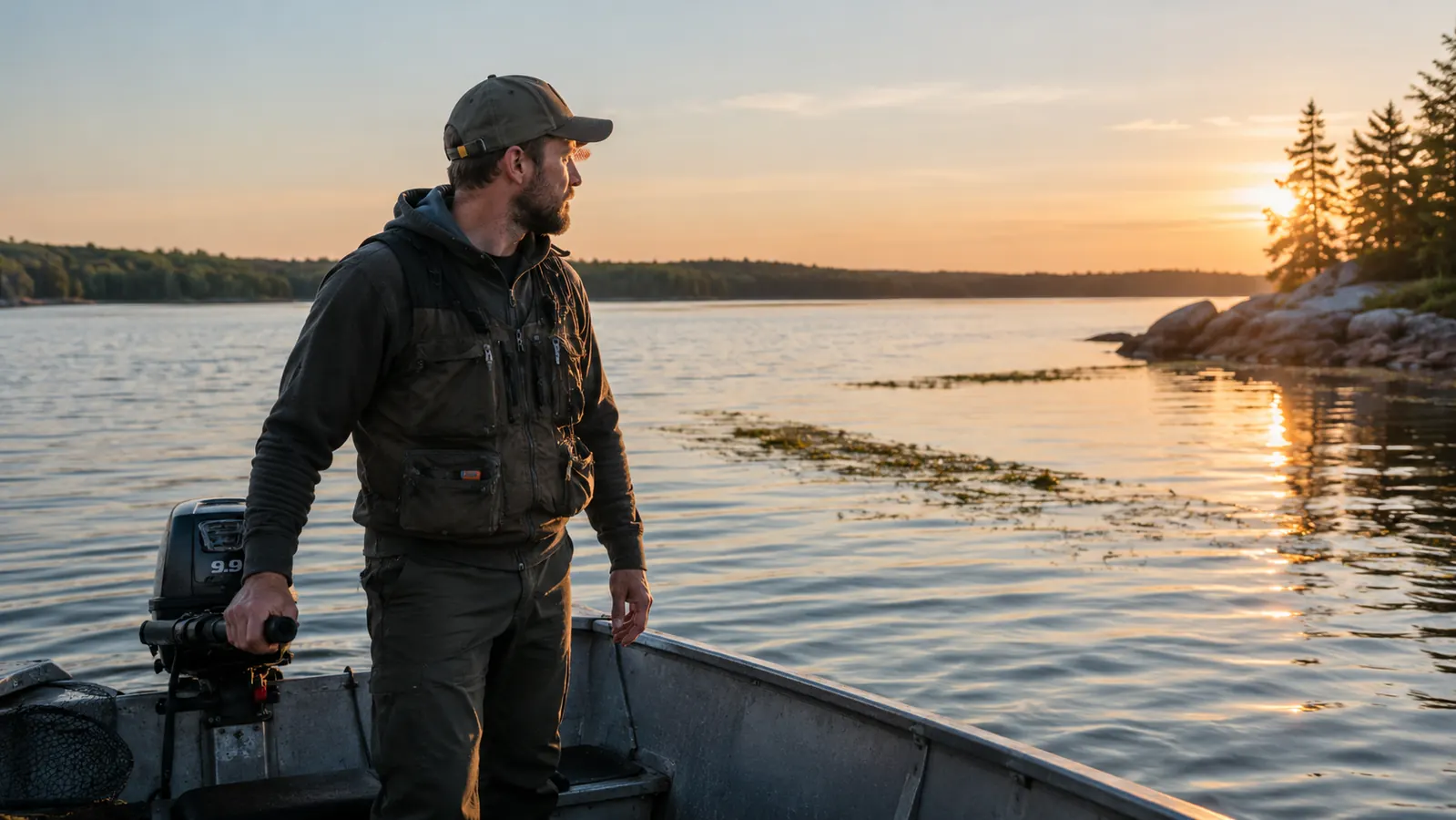
The honest downside is that it does not fish for you. The screen gives you depth and structure, but you still have to figure out where the fish are holding and what they are eating. Early on, I spent a couple of trips staring at the screen waiting for fish to show up, and that is exactly the wrong way to use it. The Garmin is a tool for finding water, not for finding fish. It shows you the places where fish are likely to be, and then you still have to present a bait well enough to make them bite.
The other thing to know is that the screen is small. It is a 3.5-inch display, and that is plenty when it is mounted at the console, but it is not a big chart plotter. Reading it at speed takes a second to get used to, and the transducer needs a solid mount or you will lose the bottom reading when the boat bounces. Neither of those is a reason to skip it. They are just reasons to set it up carefully and give yourself a few trips to learn what the screen is telling you.
A Few Setup Notes Worth Knowing
Mounting the Striker 4 took me about an hour on a rainy Saturday. The kit comes with a swivel mount, and I bolted it to the console of my 16-footer so I can tilt the screen against the sun. The transducer mounts on the transom with a bracket, and getting the angle right matters. If it sits too high, it will blow out at speed and lose the bottom. I set mine so the bottom reading held at trolling speed, and that has been the right adjustment all season.
One more thing I would tell a friend. Spend a few minutes with the settings before you take it on the water. The Chirp sonar is clearer than the old single-frequency units I used years ago, and the gain setting makes a big difference once you learn how to read it. Too much gain and the screen fills with clutter. Too little and you miss the fish. There is a learning curve, but it is short, and the payoff is a screen you actually trust instead of one you are constantly second-guessing.
The Bottom Line
If I had to sum it up in one sentence: the Garmin Striker 4 is the fastest way I know to learn what is under your boat, and reading the water by eye is the skill that will keep you catching fish when the electronics are off. Most of us will end up with both. The question is just which one you need first.
For me, the answer was the Garmin. I still watch the surface, I still pay attention to the wind and the weeds, but I no longer have to guess at depth and structure on a lake I have never fished before. That confidence is worth more than the cost of the unit, and it is the reason the Striker 4 stays mounted on my boat all season.
Put the Striker 4 on your boat before your next lake trip
The Garmin Striker 4 is the rare piece of electronics that pays for itself in time saved. You spend less time trolling blind and more time fishing the spots where the fish actually are. If you fish lakes at all, this is the upgrade I would make first.
Amazon Check Today's Price on Amazon →